
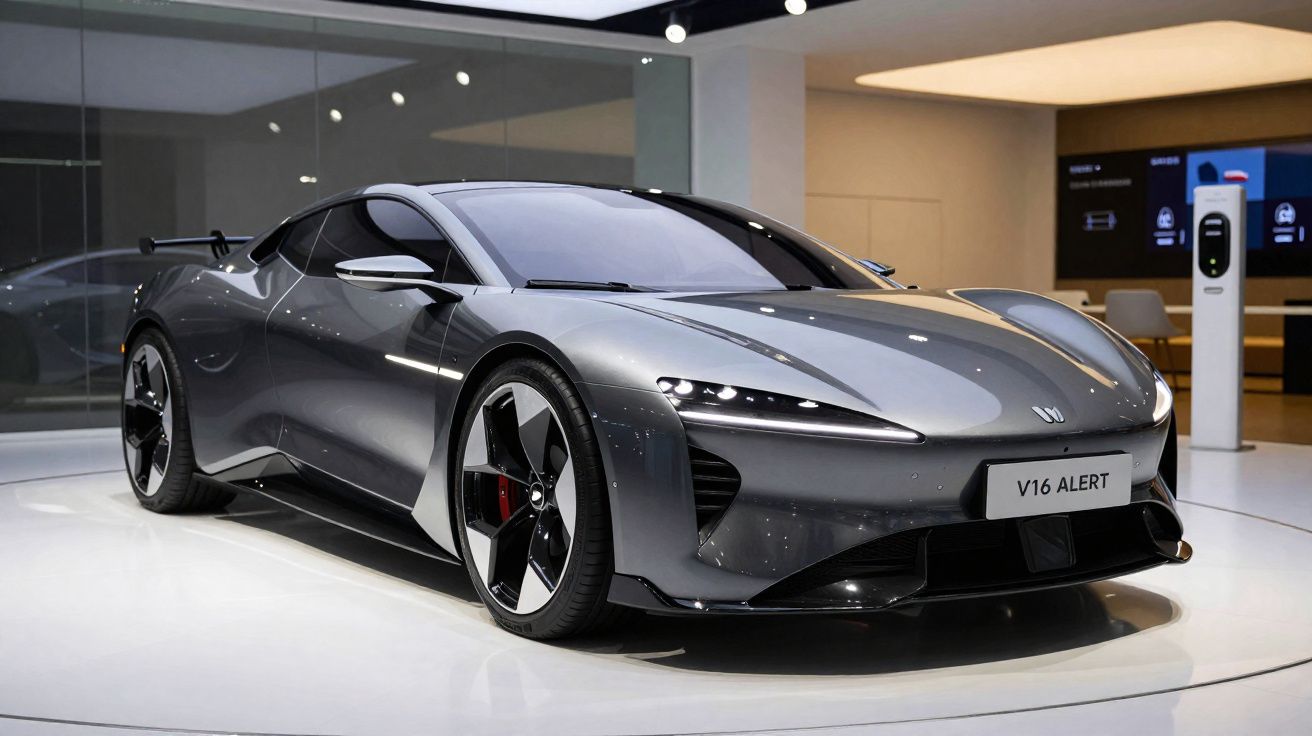
When driving to Spain, it is worth taking a hard look at what you carry in the car. Spain’s traffic authority is phasing out a familiar breakdown aid and mandating a new warning system. The move is designed to improve safety on motorways and rural roads-but it does not affect every driver in the same way.
What is changing in Spain: V16 emergency light replaces the warning triangle for Spanish-registered vehicles
For years, the warning triangle was the standard response across much of Europe when a vehicle broke down or was involved in a collision. Positioned several dozen metres behind the car, it was meant to alert approaching traffic in good time. In Spain, that era is ending.
From 1 January 2026, vehicles registered in Spain must carry a V16 emergency light. This compact, high-intensity warning lamp becomes the official replacement for the warning triangle. The triangle may still be common in boots, but for Spanish number plates it will no longer be the approved solution.
From 2026, the V16 emergency light is the only permitted breakdown warning system for vehicles registered in Spain.
Spain has effectively been running a transition period for some time. Since 1 July 2021, drivers have been allowed to use either a warning triangle or a V16 beacon. That choice disappears with the turn of 2025/2026: Spanish owners must then use the V16 light.
How the V16 beacon works (V16 emergency light in practice)
At its simplest, the V16 beacon is a small, flashing yellow–orange light unit designed to be placed on the vehicle roof. It is intended to be as straightforward as possible to use, particularly when visibility is poor or stress levels are high.
- Magnetic mounting: the light attaches to the roof with a magnet.
- Fitting from inside the car: the driver can place it without stepping into live traffic lanes.
- 360-degree visibility: it can be seen from all directions, like a compact roof beacon but in a warning colour.
- Fast activation: a single button press starts the flashing sequence.
The key improvement over the warning triangle is that it removes the need for the most hazardous part of the process: walking along the hard shoulder or into the carriageway to position the triangle. Traditionally, the driver would get out (ideally wearing a high-visibility vest) and place the triangle around 50–100 metres behind the vehicle, depending on the road and local rules. On motorways-especially in rain, darkness or fog-that walk can be genuinely dangerous.
Why Spain is making the change
Spain’s traffic authority now regards the older approach as an unacceptable risk. People have repeatedly been injured-and in some cases killed-while attempting to set up a warning triangle, after being struck by passing vehicles on the road or hard shoulder. The V16 emergency light is aimed squarely at reducing that exposure.
With a V16 beacon, the driver can remain in the vehicle-eliminating the dangerous walk along the hard shoulder.
There is also a second driver behind the new requirement: technology. A warning triangle is purely passive; many V16 lights can do more than just shine.
Integrated GPS: location signalling from the roof
A large number of approved V16 emergency lights include an integrated GPS module. In a breakdown or collision, the unit can transmit the vehicle’s position to the relevant emergency and roadside assistance services. That can speed up help-particularly on high-speed roads or in sparsely populated areas.
In practical terms, this can mean:
- the location is sent automatically;
- lengthy phone-based directions are largely avoided;
- recovery and rescue teams can find the vehicle even in poor visibility or confusing terrain.
Used this way, the V16 beacon becomes an additional layer alongside systems such as eCall and connected emergency services found in newer cars. It can also give older vehicles a form of “digital safety net” without needing built-in connectivity from the factory.
Does the rule apply to UK and other foreign tourists?
The obvious question for visitors is whether everyone driving into Spain must now buy a V16 emergency light. For the moment, Spain’s position is reassuring.
Vehicles with foreign number plates do not currently need a V16 emergency light, provided they carry a warning triangle.
In other words, drivers in Spain on non-Spanish plates remain subject to the equipment rules of their home country. If your normal legal kit includes a warning triangle, you are not currently expected to replace it with a V16 beacon just for a trip to Spain, and you should not be fined solely for lacking a V16 unit.
Even so, many safety specialists suggest considering one if you drive in Southern Europe frequently. The main advantage-avoiding the risky walk to place a triangle-is hard to ignore. And if you later register a car in Spain or keep a vehicle there long-term, you will need the V16 emergency light anyway.
What to do now: a practical checklist for regular Spain drivers
If Spain is a frequent destination for you, a few straightforward steps can reduce stress later:
- Review your standard equipment: warning triangle, first-aid kit, and a high-visibility vest.
- Check roof compatibility: ensure there is a suitable magnetic area for a V16 beacon (some roof materials or accessories can affect adhesion).
- Consider buying an approved V16 emergency light if you spend a lot of time driving in Spain.
- Practise once before you travel: learn the on/off control and how it sits on your roof so you are not figuring it out in an emergency.
When shopping, ensure the model is compliant with Spain’s V16 requirements. A generic magnetic amber light is not automatically acceptable. Reputable retailers clearly state compliance with the V16 standard and any required connectivity features.
Choosing the right V16 emergency light: approvals, power and connectivity
If you decide to purchase a unit for added safety, focus on the practical points that matter in real breakdown scenarios. Look for a V16 beacon with a battery life that comfortably covers extended stops, and check how the device indicates low power so you are not surprised when you need it most. It is also worth confirming whether the model’s location functions require a subscription, a built-in SIM, or specific coverage conditions-details that can vary by product.
Just as importantly, think about storage and access. A V16 emergency light only helps if you can reach it instantly. Keeping it in the glovebox or door pocket-rather than buried under luggage-makes it far more likely you will use it correctly.
Part of a wider road-safety debate
Spain’s decision fits into a broader European discussion about how new vehicle technology changes real-world safety. In the UK, for example, research commissioned by the Department for Transport has highlighted a different modern concern: headlamp glare. Many current LED systems can dazzle other road users when poorly aligned, generating regular complaints.
This points to a bigger issue that often sits in the background: how advances such as brighter lighting, driver-assistance systems, automatic emergency calling-and now connected breakdown warning lights-can reduce crashes while also introducing new questions about standards, behaviour and unintended consequences.
Benefits and limits of the new warning technology
The V16 emergency light shows the direction of travel: combining strong visibility with digital connectivity. Even so, it is not a cure-all:
- it does not replace a high-visibility vest, which remains sensible if you must leave the vehicle;
- it cannot prevent secondary collisions if the car is stopped in a particularly dangerous position (for example, just beyond a bend);
- it depends on reliable power-either the device’s own battery or a functioning electrical supply, depending on the model.
Despite those limits, the safety gain is clear in the moments that matter most-when every second counts and every step near traffic increases risk. On motorways, where cars and lorries pass stranded vehicles at speed, avoiding the need to place a warning triangle can genuinely save lives.
For anyone who drives regularly-whether for work or leisure-Spain’s change is a useful prompt to reassess overall preparedness: a sensible warning device, routinely checked lights and brake lamps, and up-to-date knowledge of how to behave at the roadside all improve the odds of coming through a breakdown unhurt, particularly on night journeys or long holiday routes across multiple countries.


Comments
No comments yet. Be the first to comment!
Leave a Comment