
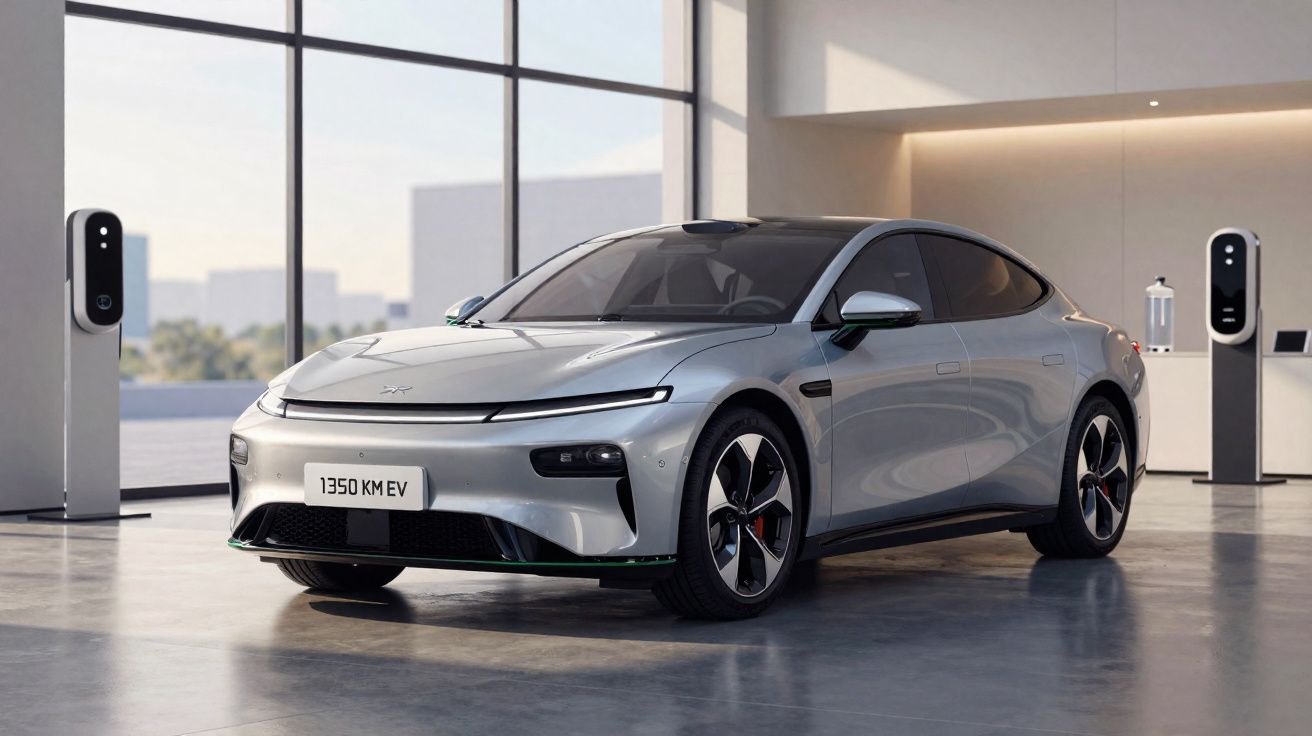
A fresh idea aims to make that stress disappear.
Rather than solving range anxiety by fitting ever bigger battery packs, a supplier based in Stuttgart argues that sharper thermal management plus a small on-board generator can extend real-world distance significantly. The company behind the concept is MAHLE, which says its production-ready setup could allow a typical battery-electric car to travel up to 1,350 km between stops, depending on the vehicle it’s installed in.
MAHLE: the supplier making the 1,350 km claim
MAHLE is not an OEM. It produces the under-the-skin hardware drivers depend on without noticing: thermal systems, high-voltage equipment and powertrain components. At IAA Mobility in Munich, MAHLE presented a pairing of two elements:
- a compact, high-efficiency generator
- an integrated heat-pump thermal module
Together, these target the two factors that most often limit usable range: energy spent keeping the cabin and battery at the right temperature, and the sheer battery size required to make long-distance driving comfortable.
Up to 1,350 km on a single charge, using a compact multi-fuel generator and a high-efficiency heat pump working together, according to MAHLE.
The underlying approach is straightforward: size the battery more sensibly for everyday driving, then cover peak demand on longer journeys with a lightweight generator that supplies the high-voltage system. At the same time, the thermal module aims to reduce consumption further by actively directing heat where it is most valuable-more like a strategist than an emergency responder.
A MAHLE range extender designed for series production
MAHLE’s message is that this is not a show-car experiment. The generator includes a small combustion engine used solely to produce electricity. It is designed for multi-fuel operation, including ethanol, creating an additional route to reducing lifecycle CO2. Alongside that, the thermal module uses a heat pump to recover and shift energy around the vehicle instead of letting it dissipate as waste.
The thermal module focuses on the biggest winter hit: cabin heating and battery conditioning. MAHLE states up to 20% more range in low temperatures.
Winter performance is where many modern EVs fall short. Resistive cabin heaters can draw heavily from the battery, while a cold-soaked battery both charges more slowly and delivers less power. MAHLE’s answer is centralised thermal control: the module manages coolant circuits for the battery, power electronics and cabin within a single unit, reducing plumbing complexity and lowering energy losses.
What changes for drivers day to day
- Long-distance driving depends less on frequent ultra-rapid charging stops.
- Smaller battery packs can reduce vehicle mass and may improve handling.
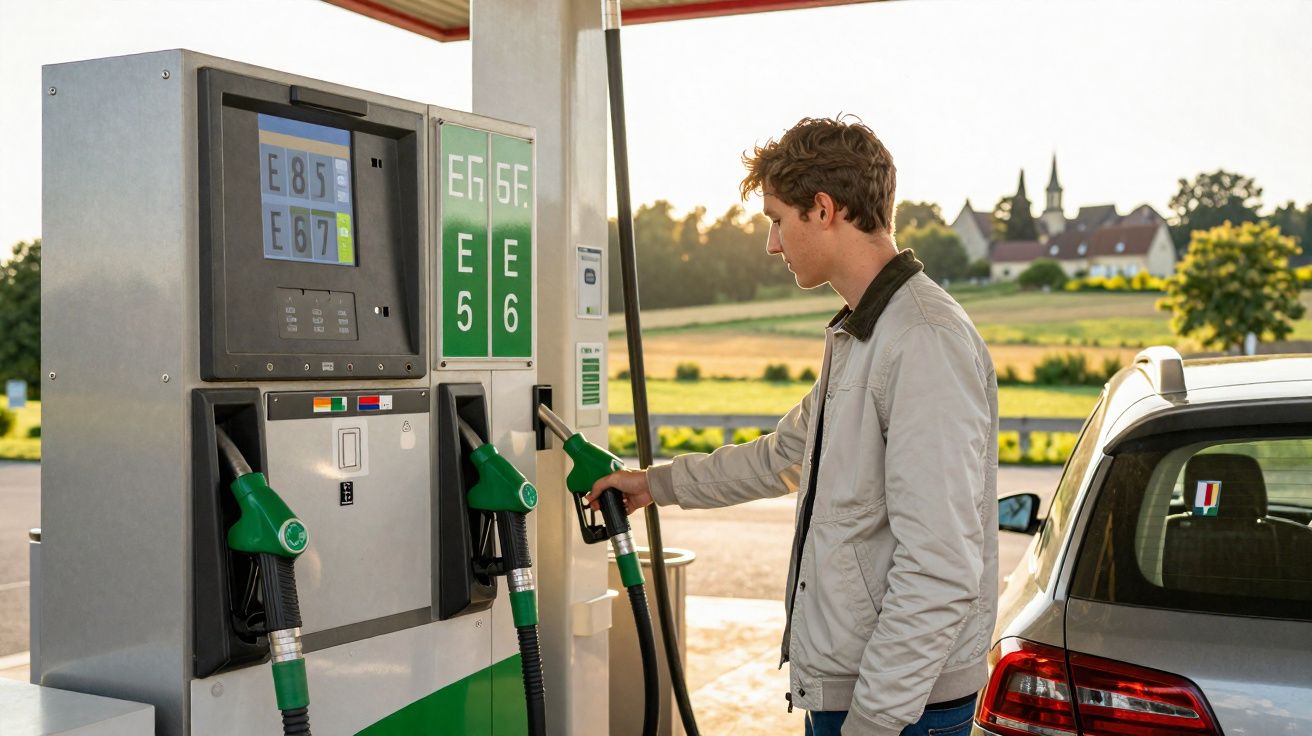
- When required, refuelling the generator takes minutes at conventional pumps.
- Winter trips should deliver more consistent range through active thermal management.
- Battery longevity may benefit if temperatures are kept within the optimal window.
Why “up to 1,350 km” is plausible (and what it depends on)
MAHLE frames the figure as a system maximum, not a universal guarantee. Actual results depend on the vehicle, the battery size and how the car is used. The idea is that, with a modest battery sized around daily needs, the car operates as a pure EV most of the time. On longer journeys, the generator switches on to maintain state of charge or provide additional electrical power-functionally a serial hybrid arrangement.
Because the engine is not connected to the wheels and can be held at a narrow, efficient operating point, fuel consumption during steady cruising can, in principle, compare favourably with more conventional hybrid layouts that must follow fluctuating road-load demands.
Cost, mass and packaging
Battery cells remain the most expensive element in many EV bills of materials. Downsizing the pack and adding a compact generator can be a cost-balancing strategy. Mass follows a similar pattern: a smaller battery reduces weight; the engine-generator adds some back, though typically not as much as the battery mass removed. Packaging also remains manageable because the thermal module combines several thermal functions into one device.
| Architecture | Long-trip strategy | Winter efficiency | Estimated vehicle mass | CO2 pathway |
|---|---|---|---|---|
| Large battery EV | Frequent fast charging | Larger heater penalty | Higher due to large pack | Zero tailpipe, grid-dependent |
| MAHLE extender EV | Charge + brief refuelling as needed | Heat pump reduces losses | Smaller pack offset by compact generator | Potentially lower with ethanol option and optimised engine mapping |
The ethanol angle, policy and regulation
MAHLE also works on components for engines capable of running on 100% ethanol. This matters in regions where biofuels are plentiful and where future regulation may account for well-to-wheel emissions rather than focusing only on tailpipe output. In Europe, policy has largely centred on tailpipe CO2, and discussion continues about how (and whether) to credit low-carbon liquid fuels. MAHLE’s stated position is to allow competing technologies to be assessed on genuine climate impact as well as affordability.
Multi-fuel capability turns the generator into a policy lever: combine electricity with low-carbon liquids to reduce emissions without relying on oversized batteries.
From a UK perspective, the practical value of ethanol compatibility will hinge on fuel availability and standards at the pump. Mainstream forecourts already supply E10 petrol, but higher-ethanol blends are not universally accessible; that gap would influence how often drivers could actually take advantage of the ethanol pathway.
What this concept is not
This is not a plug-in hybrid where a large engine drives the wheels. Here, the engine’s sole role is electricity generation-full stop. That simplifies control and allows operation in the most efficient zone. It also helps the vehicle retain the character people associate with a pure EV: smooth torque delivery, quiet cruising and no gearshifts-because there are none.
Open questions that still matter
Several practical considerations remain:
- Noise and vibration must be managed carefully; even a small engine can become intrusive if it starts at the wrong moment.
- Maintenance changes: owners may need both high-voltage servicing and periodic checks for the generator.
- Fuel storage introduces design and compliance work, including crash performance and regulatory requirements.
- Fleet operators will want robust total cost of ownership figures across three to seven years.
The direction of charging infrastructure is another variable. If ultra-rapid networks expand quickly and deliver consistently reliable uptime, the argument for a range extender weakens in some regions. Where distances are greater, temperatures vary more sharply and infrastructure lags, the case becomes stronger.
An additional consideration is user experience at motorway service areas: if queues or reduced charger availability are common at peak times, a short refuelling stop for the generator could be attractive even for drivers who typically charge at home.
Who benefits first
MAHLE’s concept appears best suited to segments that combine higher mass with varied use cases. Compact SUVs and crossovers stand out: they often carry families, occasionally tow and frequently face winter conditions. Delivery fleets could also gain from lighter battery packs and more stable thermal behaviour, helping to reduce downtime. Rural drivers-and markets with patchier fast charging-may benefit as well, particularly where ethanol or other low-carbon fuels are widely available.
What to watch next
- Which carmaker signs the first production agreement, and for which vehicle class.
- Certified consumption and range results under WLTP and EPA testing.
- Cold-soak test performance at sub-zero temperatures.
- Generator noise levels at motorway speeds.
- Battery degradation data with tighter thermal control.
Extra context for readers who want the bigger picture
Range extenders are not a new idea. The BMW i3 REx used a small two-cylinder unit to stabilise battery charge, and the Mazda MX-30 R-EV brought back a rotary engine as a compact generator. MAHLE’s distinctive angle is deeper thermal integration combined with multi-fuel capability aimed at reducing emissions. That thermal focus matters because, in winter, a significant share of range loss can come from heating and battery conditioning rather than propulsion itself.
A quick at-home sanity check can help frame whether this architecture makes sense: estimate your weekly electric mileage versus your annual long-trip mileage. If roughly 85–95% of your driving is short, routine journeys, a smaller battery can cover everyday needs efficiently. The generator then supports the handful of longer trips that might otherwise require lengthy charging stops. Fuel consumption remains concentrated in those longer journeys, while the vehicle still drives electrically the majority of the time.
There are still risks. Regulatory definitions could shift and change how such vehicles are classified or incentivised. Some buyers will prefer the mechanical simplicity of a battery-only EV. Residual values will depend on how first and second owners perceive generator upkeep. Equally, the potential advantages-lower mass, more consistent winter range and reduced manufacturing cost-could make it easier to offer more affordable EVs without motorway-range anxiety.

Comments
No comments yet. Be the first to comment!
Leave a Comment