
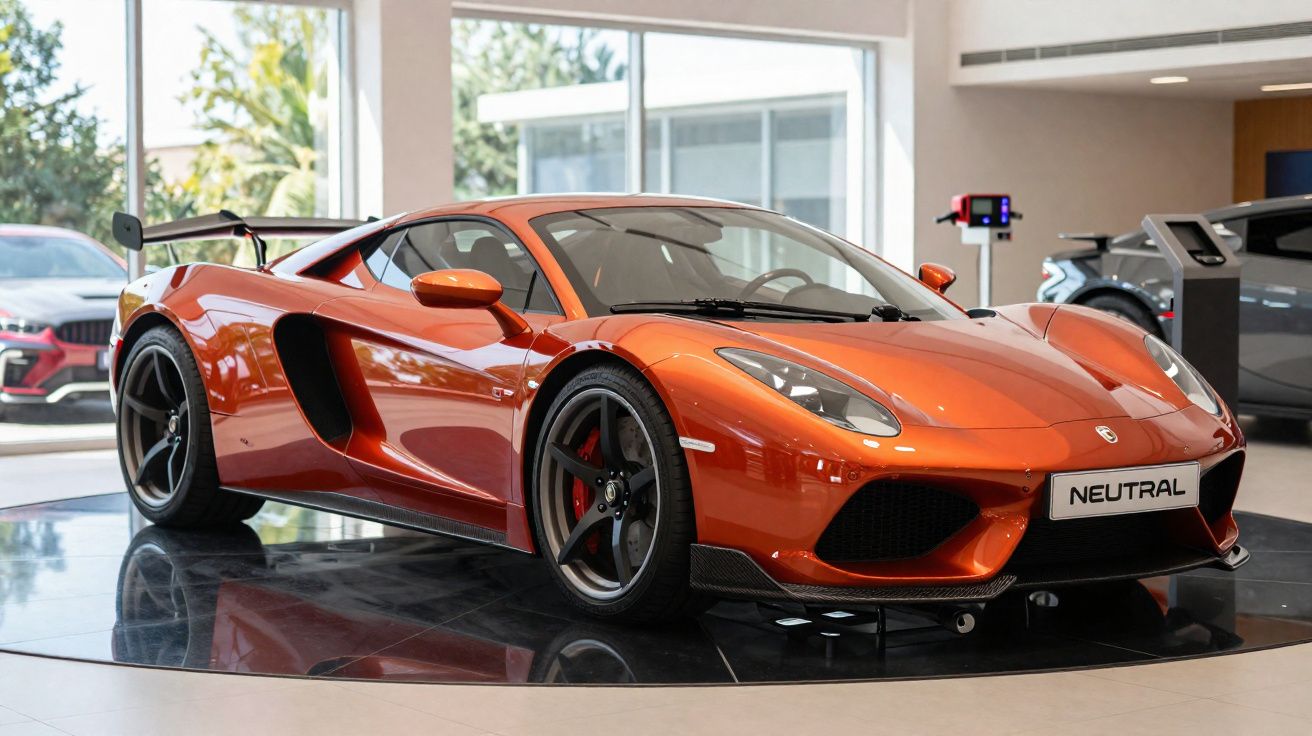
You tap your fingers on the steering wheel without noticing, while your left foot sits half-irritated, half-impatient on the clutch. In the lane beside you there’s an older Volkswagen Golf. Through the window you can see the driver: reclined, calm, right arm resting, gear in neutral, both feet on the floor. Somehow his car looks settled, while yours gives a faint shiver, as if it’s itching to launch.
The seconds stretch out like chewing gum. Seconds in which your car quietly takes a beating-and your wallet, too. Because in these ordinary moments at red traffic lights, you’re effectively deciding how long your clutch, gearbox and even your own nerves are going to last. The red phase becomes a small test of character.
What really happens to your car at red traffic lights
Many drivers wait at a red light with the clutch fully depressed, first gear selected, hand hovering over the gear lever-feeling “ready” and, in their mind, efficient. The engine idles away, you watch for amber, and it all feels like standard practice.
Mechanically, though, that tiny slice of everyday driving is like forcing components to do extra work for no useful reason. With the clutch pedal held down, the clutch is kept under constant load, and the clutch release mechanism is held in a working position the whole time. The release bearing is running continuously, even though the car isn’t moving. All of that effort is spent just to gain, at best, a fraction of a second when the lights change. That’s where the quiet wear begins-the kind you don’t notice until it becomes expensive.
You can see how common this is if you watch a major junction for an hour. In an ADAC spot-check in Munich, roughly two thirds of drivers waited at red lights with first gear engaged and the clutch pressed down. Only a minority selected neutral and rested their hands calmly on the wheel.
A workshop manager in Cologne told me he often sees clutch problems in city-driven cars well before 100,000 km. He can practically hear the pattern in conversation: “I do lots of city driving, I’m constantly stopping at lights.” And, almost without fail, it comes with the confession that they tend to wait “already in first gear”. In other words, your traffic-light habit quietly writes the invoice for your next visit to the garage.
From a technical standpoint it’s straightforward:
- First gear selected + clutch held down: the release mechanism maintains pressure against the clutch spring; the release bearing keeps spinning and wearing; the drivetrain stays under unnecessary load.
- Neutral selected + clutch released: the system relaxes; fewer parts are being kept in motion; bearings and springs get a break.
It sounds like dull engineering detail until you look at the bill. A clutch replacement can easily run into the four-figure range. One simple action at red lights can stop those costs arriving years earlier than they need to-one red phase at a time.
A clutch-friendly red traffic lights routine that noticeably reduces wear
The gentler approach can be boiled down to a simple sequence:
- As you approach a red light, come off the accelerator early and brake smoothly.
- Just before the car stops, press clutch + brake together.
- While rolling the last metre or so, select neutral.
- Once stationary, take your foot off the clutch and rest it beside the pedal.
- Hold the car with the foot brake or, if you prefer, the handbrake.
- Only when you sense traffic will move-typically as the phase is about to change-press the clutch again and select first gear.
Yes, moving off might be about half a second slower. For the mechanics, however, it’s a small wellness treatment repeated dozens of times a week.
It’s also normal to feel uneasy at first. The fear is familiar: “I’ll be slower off the mark and the car behind will start honking.” But in real life, the difference between waiting in gear and selecting first at the right moment is practically negligible. What actually causes delays is hesitation and distraction-not using neutral.
Nobody executes this perfectly every single day. Sometimes you’re tired, sometimes your mind wanders, sometimes you simply forget. Even so, adopting the habit of selecting neutral at red lights shifts the load on your car in a much healthier direction-even if you manage it 70% of the time.
Two extra situations worth knowing (often overlooked)
If your car has an automatic start-stop system, letting the car sit in neutral with the clutch released (where appropriate for your model) can also help the system behave more consistently, because you’re not holding the drivetrain in a “ready to move” state. Always follow your vehicle handbook for the correct procedure, but the principle remains: avoid keeping the clutch loaded when you’re not actually moving.
And on gradients, the handbrake is more than a comfort tool-it can prevent you from “balancing” the car on the clutch. Holding the car on the biting point at lights is a fast track to extra clutch heat and wear. Handbrake on, neutral selected, clutch released: stable car, calmer driver, happier clutch.
A driving instructor in Berlin put it bluntly:
“The clutch isn’t a holding pedal. If you wait on it, you pay twice later-once in stress and once in cash.”
To stop good intentions evaporating in daily traffic, a short mental checklist helps until it becomes automatic:
- Seen red? Watch the traffic flow, not the bumper in front.
- Roll in gently-don’t rush up to the stop line and stamp on the brakes.
- Just before stopping: clutch + brake, then straight into neutral.
- Foot off the clutch; relax your leg; leave the gear lever alone.
- As the phase is about to change: clutch down, select first, pull away smoothly.
After a few days, many drivers notice their whole style becomes calmer: less tension in the body, a quieter-feeling cabin, and an engine that no longer seems impatient. That’s often the moment driving starts to feel less like constant pressure and more like a composed routine.
What red traffic lights reveal about how we drive
Those small scenes at junctions say a lot about our default mindset. If your foot stays clamped on the clutch, it broadcasts an internal message: “I must be ready to sprint-no time to lose.” If you select neutral, breathe, and simply wait, you’re allowing a different pace for a few seconds.
That attitude spreads through everything: component wear, fuel use at the margins, and the general mood inside the car. Red lights are forced pauses in modern road life whether we like them or not. We can treat them as irritation-or turn them into a habit that can save hundreds of pounds over time.
| Key point | Detail | Benefit for you |
|---|---|---|
| Select neutral at the lights | Choose neutral, release the clutch, hold with foot brake or handbrake | Reduces load on the clutch and release bearing, noticeably extending service life |
| A conscious traffic-light routine | Early roll-off, smooth stop, relaxed pull-away | Lower stress, gentler driving style, less wear in city traffic |
| The “faster start” myth | Keeping it in gear saves almost no time but increases load | Removes pressure without making you a “slow” driver |
FAQ
Does it damage the clutch to wait at red traffic lights in first gear with the clutch pressed down?
It increases wear because the release bearing and clutch mechanism are kept working continuously. Doing it briefly isn’t usually an issue, but making it your regular habit-especially with longer waits-accelerates wear.How long does a red phase need to be before neutral is worth it?
Many professionals suggest that from roughly 5–10 seconds of standing still, selecting neutral is worthwhile. In practice, most red phases last longer than that-so it’s almost always beneficial.Does the same apply in stop-and-go traffic jams?
Yes. In slow, crawling traffic, it helps not to inch forward every metre. Leave a little space, roll gently, then move up in blocks-and in the short stationary pauses, select neutral rather than holding the clutch down.Will this method save fuel as well?
A little, yes, but the main advantage is reduced mechanical wear. Less constant pressure on the clutch means less internal friction and less unnecessary strain over time.Is the handbrake better than the foot brake while waiting?
For longer red phases, the handbrake can be more comfortable. It rests your right leg and avoids sitting on the brake pedal continuously-which is nicer at night too, as it reduces the chance of dazzling the driver behind with bright brake lights.

Comments
No comments yet. Be the first to comment!
Leave a Comment