
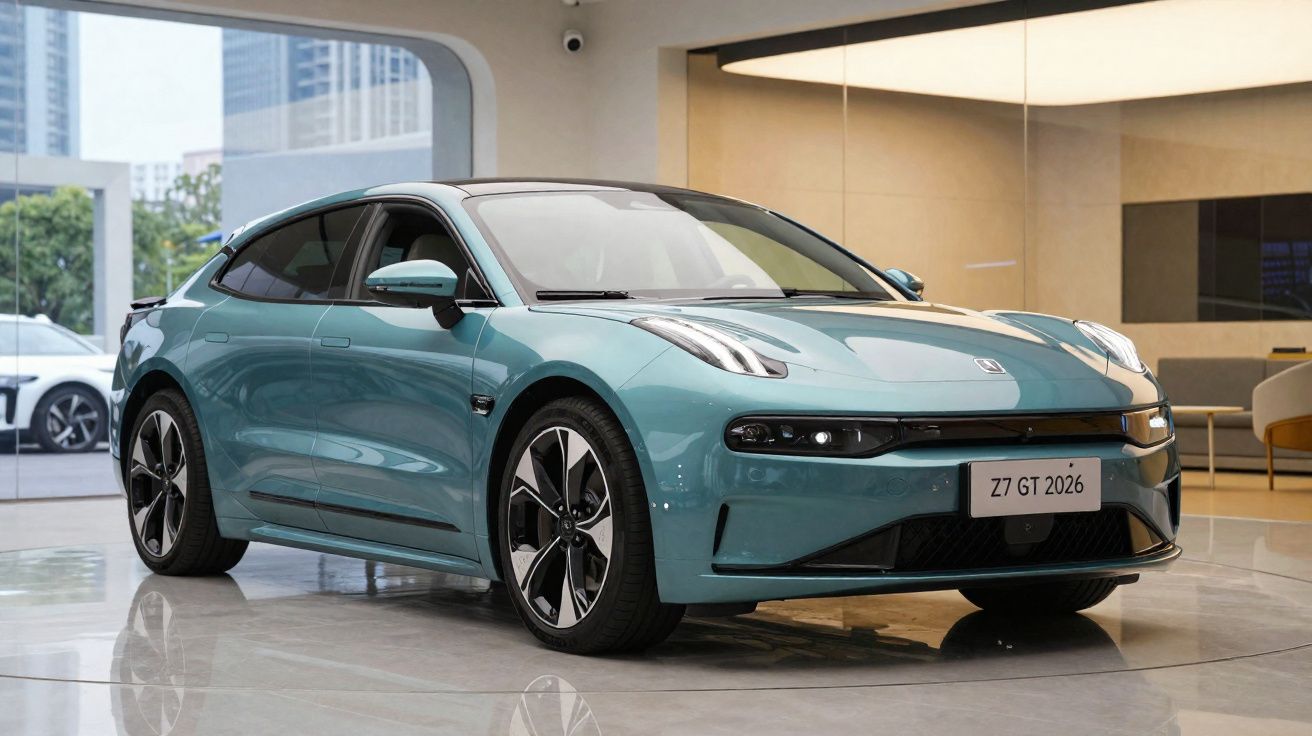
Zeekr, Geely’s premium electric sub-brand, is lining up a major European offensive with a bold new estate that mixes dramatic design, long range and pricing intended to put BMW, Mercedes and Audi on the back foot.
Zeekr’s European roll-out ramps up from 2026
Launched in 2021, Zeekr has so far concentrated primarily on China. Even so, it has already established a foothold in northern and eastern Europe - including Scandinavia, the Netherlands and Switzerland - where it recorded roughly 5,000 registrations in 2025. From 2026, the plan shifts into a higher gear with a broader move into western Europe, starting with Germany, Belgium and France.
Four battery-electric cars are set to lead the charge:
- Zeekr X – a compact segment-C SUV
- Zeekr 7X – a larger, family-focused segment-D SUV
- Zeekr 001 – a sizeable coupé-styled SUV that has been on sale since 2021
- Zeekr 7 GT – a sporty segment-D shooting brake positioned as the European flagship
Among them, the Zeekr 7 GT is the newest-looking model and effectively serves as Zeekr’s rolling technology statement for the French market in 2026.
The Zeekr 7 GT is positioned as a premium electric estate offering long range, strong performance and a starting price below €50,000.
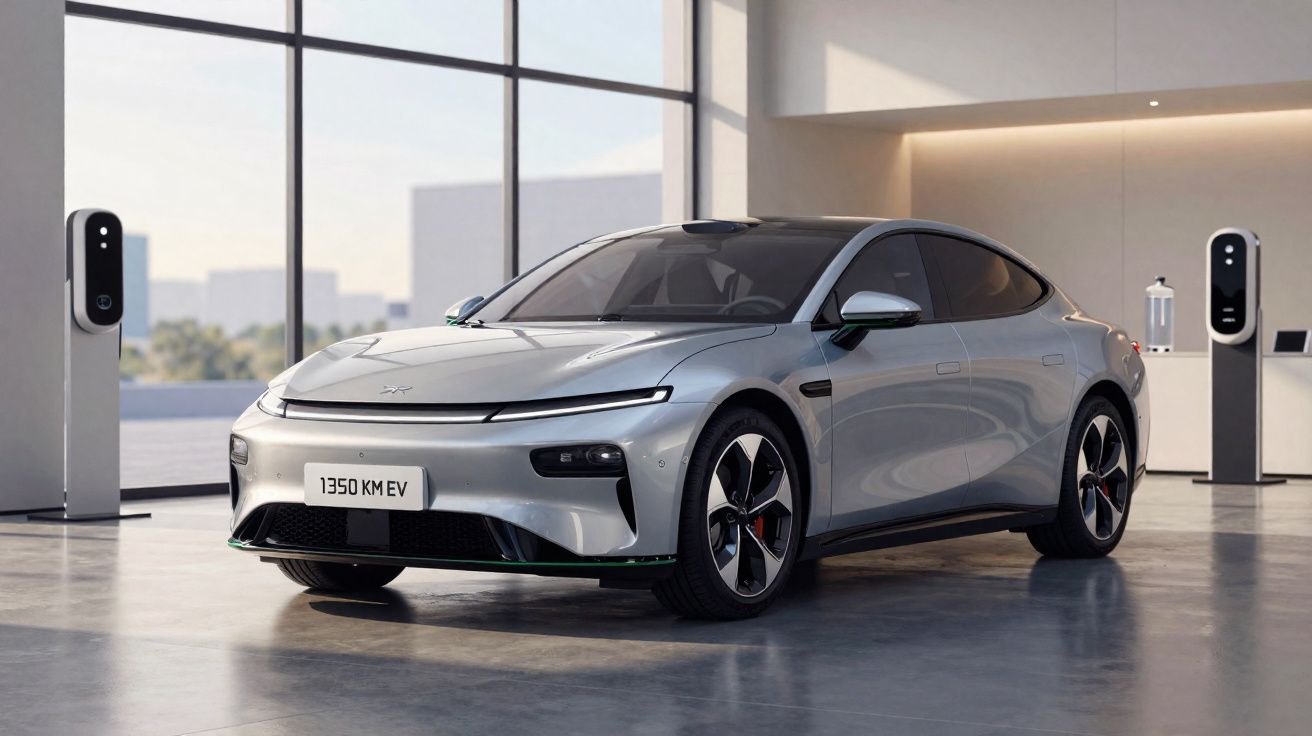
A low, swept-back shooting brake designed to lure BMW owners
Rather than following the restrained template many electric estates adopt, the 7 GT commits to the shooting brake silhouette. It sits low with an extended roofline, a short bonnet and a sharply tapering rear, while pronounced shoulders and sculpted surfaces make it look closer to a grand tourer than a conventional family estate.
Its stance is helped by the platform proportions. A 2.92-metre wheelbase pushes the wheels outwards, trimming the overhangs and freeing up interior space. Zeekr’s message is straightforward: offer Tesla and Mercedes drivers something equally distinctive, but with extra day-to-day usefulness.
Cabin practicality: Zeekr 7 GT rear space and a genuinely big boot
The interior brief is to satisfy both lifestyle buyers and families. Thanks to the long wheelbase, rear occupants get notable legroom, and the flat floor makes the centre rear seat more practical than in many combustion-era estates.
Load carrying is a standout on paper. Zeekr quotes:
- 647 litres of boot capacity with the rear seats up
- Up to 1,737 litres with the rear seats folded
Those numbers place it squarely in the large-estate class, meaning the 7 GT could realistically take the place of a traditional diesel estate for long journeys, sports equipment or bulky work gear.
With up to 1,737 litres of load space, the 7 GT aims to combine EV pace with traditional estate versatility.
Standard equipment: generous spec, even on the “Core RWD”
Zeekr appears to be leaning on high standard specification to counter any hesitation around a newer Chinese badge. The entry model, called “Core RWD”, is still presented as comprehensively equipped.
Onboard tech and comfort equipment
The standard feature list includes:
- 15-inch central OLED touchscreen with Apple CarPlay and Android Auto
- Adaptive cruise control plus a full suite of driver-assistance systems
- Panoramic glass roof
- Dual-zone climate control
- Power tailgate
- Heated front and rear seats, plus a heated steering wheel
- 10-speaker sound system
Zeekr is also signalling that material choice and build consistency are priorities, aware that buyers comparing against BMW, Audi and Mercedes tend to be highly critical of perceived quality. Expect soft-touch finishes, contrasting trim elements and a clean, screen-led dashboard layout.
Power and range: up to 646 hp and touring-focused distance
The specification underlines Zeekr’s ambition to challenge established European names. Two output levels are planned, paired with two battery sizes.
| Version | Power output | Battery capacity | Claimed range |
|---|---|---|---|
| Zeekr 7 GT (base) | 422 hp (rear-wheel drive) | 75 kWh | Lower than long-range, figure TBC |
| Zeekr 7 GT (performance) | 646 hp | Up to 100 kWh | Up to 655 km (test cycle figure) |
The attention-grabbing figure is 655 km for the largest 100 kWh pack. On paper, that surpasses the BMW i5 Touring, which is rated at around 602 km, and it also comfortably exceeds plenty of competitors that sit closer to the 500 km bracket.
With a claimed 655 km from a 100 kWh battery, the 7 GT is clearly aimed at long-distance touring, not just town driving.
Charging: 22 kW AC, plus headline 480 kW DC capability
Charging hardware is another area Zeekr is using to differentiate the car. A 22 kW AC onboard charger is included as standard, which is useful for quicker top-ups on three-phase public points and compatible home wallboxes in parts of Europe.
On DC rapid charging, the 7 GT is said to support up to 480 kW in ideal conditions. Where a charger can actually deliver that level of power, Zeekr claims a 10–80% charge in about 13 minutes, placing it among the fastest-charging EVs announced so far.
The car also offers V2L (vehicle-to-load), enabling the battery to supply power to external equipment - from camping kit to tools on a work site - effectively turning the estate into a mobile power source.
Price strategy: the lever Zeekr wants to use against BMW
An early reference point comes from Belgium, where the Zeekr 7 GT is listed from €49,990. Final UK and French pricing for 2026 has yet to be confirmed, but the intent is obvious: come in meaningfully below comparable German premium models while pairing the price advantage with strong standard equipment and long range.
A starting price under €50,000 for a 422 hp, high-spec electric estate gives German rivals limited room to manoeuvre.
For perspective, a similarly powerful and similarly equipped BMW i5 Touring or Mercedes EQE SUV can quickly climb well beyond that level once options are added. Zeekr is betting that both private customers and company-car drivers will accept a newer nameplate in return for stronger value on paper.
Zeekr 7 GT vs rivals: where it lands against BMW i5 Touring and Denza Z9 GT
In Europe, Zeekr’s most direct estate benchmark is the BMW i5 Touring, while the Denza Z9 GT targets a related “electric GT” brief. Based on currently available figures:
| Model | Power | Battery | Range (km) | Boot volume (L) | Fast charge 10–80% | Base price |
|---|---|---|---|---|---|---|
| Zeekr 7 GT | 422 / 646 hp | 75 or 100 kWh | Up to 655 | 647 – 1,737 | 13 min (up to 480 kW) | €49,990 (Belgium) |
| BMW i5 Touring | n/a | n/a | 602 | n/a | n/a | n/a |
| Denza Z9 GT | n/a | n/a | ~500 | n/a | n/a | n/a |
Even with incomplete competitor data here, the theme is consistent: Zeekr is aiming to win on the mix of range, practicality and headline price.
What the Zeekr 7 GT could mean for buyers in France and the UK
In France, the 7 GT lands as many households are looking to move on from ageing diesel estates while remaining cautious about EV compromises. A longer claimed range helps on extended motorway journeys, while a large boot and flexible cabin preserve the utility people expect from a break.
For UK drivers, the appeal will likely hinge on similar priorities - long-distance confidence, usable load space and strong standard kit. If Zeekr can match its specification with competitive servicing and a reassuring warranty package, it could become a credible alternative to established premium estates for drivers who want something different without giving up practicality.
Another real-world consideration is charging access. Ultra-high DC figures make headlines, but day-to-day convenience often comes down to reliable local rapid chargers and straightforward home charging - particularly for drivers without off-street parking.
Key terms explained: battery size, fast charging and V2L
Three concepts matter most when weighing up the 7 GT:
- Battery capacity (kWh): Bigger numbers, such as 100 kWh, usually translate into more range, but they can also add weight and cost. With 75 kWh and 100 kWh options, the 7 GT is designed to let buyers choose between a lower price and maximum endurance.
- Fast charging rate (kW): The 480 kW figure is a best-case maximum. Actual charging speed depends on the charger’s capability, battery temperature and the state of charge, so real-world times can be longer.
- Vehicle-to-load (V2L): This feature allows the car to power external devices. Typical uses include laptops on a remote job, charging an e-bike on holiday, or keeping a small fridge running during a power cut.
Real-world use: who the 7 GT is likely to suit
Picture a household in Lyon or Manchester combining everyday commuting with regular cross-country trips. With the larger battery, the 7 GT should be able to manage a long motorway journey with a single rapid-charging stop - assuming the route offers suitably powerful chargers. The 22 kW AC capability is also useful when staying overnight at hotels or visiting family with three-phase supply, potentially reducing the time required to replenish the battery.
For freelancers and small firms, the combination of a large boot and V2L could be particularly useful: transporting equipment while also powering it on site. Tradespeople, photographers and outdoor event organisers may value being able to run devices directly from the car rather than carrying a separate generator.
Questions remain that will heavily influence confidence - long-term reliability, residual values, dealer coverage and software support across France, the UK and the wider region. Even so, the underlying proposition is clear: strong specifications, ambitious charging claims, aggressive positioning and a direct challenge to cars such as the BMW i5 Touring, long a reference point in the premium estate segment.

Comments
No comments yet. Be the first to comment!
Leave a Comment