
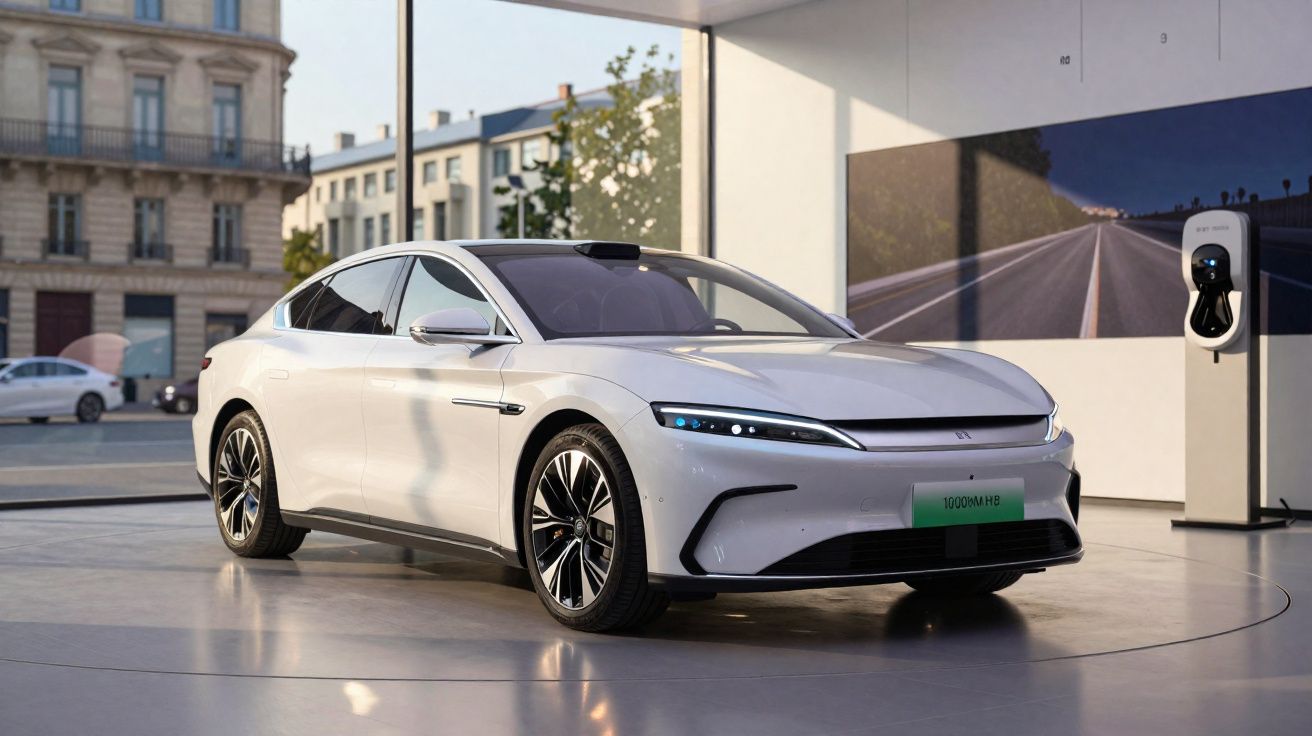
Long-range plug-in hybrids from Chinese brands are now arriving in Europe with pricing that undercuts many domestic competitors, at the very moment numerous established manufacturers are trimming their mid-size saloons from the line-up. The mismatch between policy ambition and what shoppers are prepared to buy is starting to resemble a structural crack in Europe’s green transition.
China’s long-range hybrids arrive as Europe’s saloons fade
As European decision-makers argue over timelines and bans for combustion engines, several Chinese car groups are backing a more adaptable formula: plug-in hybrids (PHEVs) that can cover hundreds of kilometres on electricity, while retaining a petrol engine for longer journeys.
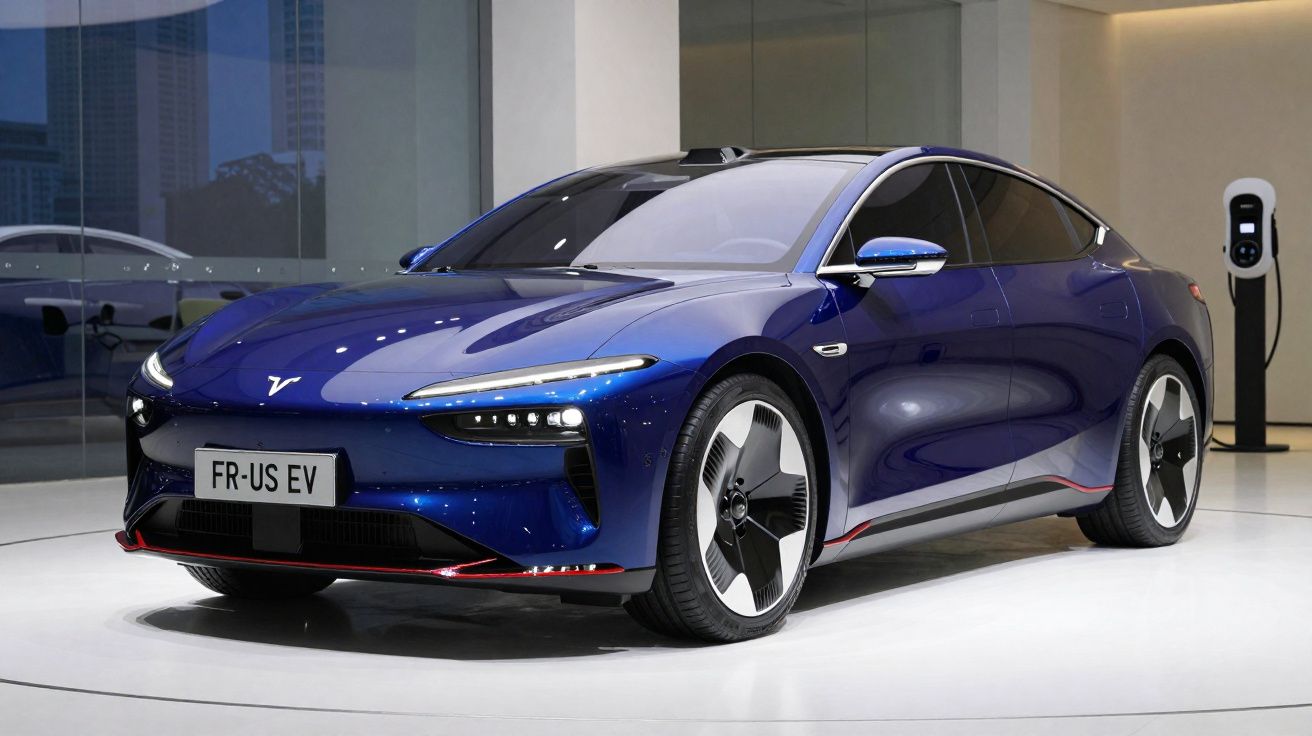
Among the most aggressive is BYD, already one of the world’s largest EV producers. The company is leaning heavily into long-range PHEVs, led by the BYD Seal 6 DM-i-a plug-in hybrid saloon now offered in France. In footprint it sits close to a Volkswagen Passat, yet its sticker price is pitched nearer to what buyers often associate with a compact SUV rather than a D‑segment saloon.
Launched at under €39,000 in France, the BYD Seal 6 DM‑i is quoted at up to around 1,500 km of total range with a full tank and a full battery.
At the heart of the package is an efficient 1.5‑litre petrol engine paired with an 18.3 kWh battery-substantially larger than the typical PHEV battery pack sold in Europe. Under official testing, BYD claims up to 140 km of electric-only driving, which for many motorists could cover an entire working week of commuting without using petrol.
Brussels pushes full electric; drivers keep asking for flexibility
This push from China is arriving at a very deliberate moment. From 2035, the EU intends to effectively stop the sale of new combustion-engined cars, steering the market towards battery electric vehicles (BEVs). In parallel, low-emission zones are multiplying across major cities, including Paris, Lyon, Milan and Madrid.
These two forces were meant to accelerate a decisive move to battery-only cars. Instead, a rising proportion of buyers still pause-pointing to patchy charging provision, high upfront costs, and lingering range anxiety when it comes to holiday travel.
On weekdays in town, drivers want zero-emission running; on summer motorway slogs, many still want the reassurance of a fuel pump.
That tension is precisely what long-range PHEVs are designed to exploit: cars that can run quietly in electric mode through urban centres, yet still complete a journey such as Paris to Barcelona without needing a charging stop.
BYD Seal 6 DM‑i in France: three versions with range that shames European PHEVs
In France, the Seal 6 DM‑i goes on sale immediately in three trims. Across the range, the emphasis is clearly on usable range rather than headline acceleration figures.
| Version | Electric range (WLTP) | Total range (claimed) | Price (France) |
|---|---|---|---|
| Boost | 80 km | 1,200 km | €38,490 |
| Comfort Lite | 120 km | 1,400 km | €42,490 |
| Comfort | 140 km | 1,500 km | €43,490 |
To put those numbers into context, a Peugeot 508 Hybrid-one of the few remaining French PHEV saloons-starts at over €46,000 and commonly delivers about 60 km of electric range with under 800 km combined. The difference is hard to ignore, particularly when you compare it with how people in Europe actually use their cars.
Designed around day-to-day commuting reality
French motorists cover around 30 km per day on average. In that sort of routine, the Seal 6 Comfort could remain in full electric mode for several days before the petrol engine is required. In dense, slower-moving city traffic, owners might even see more than 100 km of electric running between charges.
| Typical use | Fuel consumption (claimed) | Electric range |
|---|---|---|
| Urban commuting | 1.5 L/100 km | 120–140 km |
| Suburban / mixed | 1.8 L/100 km | 100–120 km |
| Motorway | around 5.5 L/100 km | under 80 km |
These outcomes still depend heavily on drivers plugging in routinely, yet they illustrate why the concept looks well-suited to Europe’s web of low-emission regulations. A PHEV that behaves like an EV in town but defaults to petrol-car convenience for longer journeys neatly avoids several of the practical barriers slowing BEV adoption.
French brands step back as China steps in
The strategic contrast is becoming increasingly obvious. Stellantis and Renault have been thinning out their classic D‑segment saloons. The Peugeot 508 is approaching the end of its run in hybrid guise, while the Renault Talisman-once positioned as a family and fleet staple-has already vanished from price lists.
At the same time, Chinese manufacturers are moving in with a broader selection of plug-in saloons and estates. The BYD Seal 6 is only one among multiple forthcoming models aimed squarely at European company-car users and motorway-mileage families.
Where French brands see a segment in decline, Chinese manufacturers see a clear lane with limited competition and attractive margins.
This matters because D‑segment fleet cars-often employer-leased-have an outsized influence over what the public sees on the road and, a few years later, what becomes plentiful on the second-hand market. If Chinese long-range hybrids become the default company-car choice, their used-market footprint is likely to expand quickly after the first leasing cycles end.
Interior space, practicality and tech aimed at family use
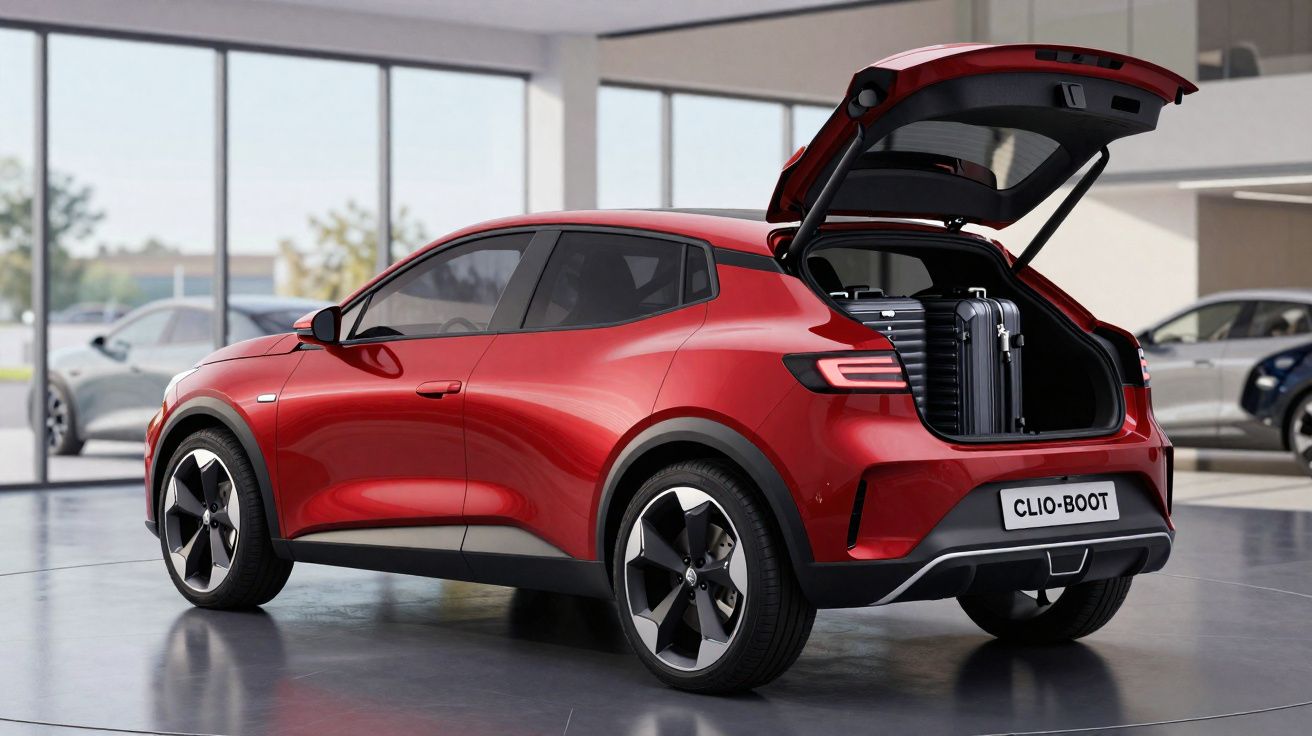
On paper, the Seal 6 is dimensioned to fit this role neatly. At roughly 4.78 m in length with a long wheelbase, it occupies similar space to many European fastbacks and estates. Rear legroom is presented as generous for two adults, while a boot of about 450 litres puts it firmly in traditional family-car territory.
Specification levels are set to tempt buyers away from familiar German and French alternatives, including:
- A large 15.6-inch central touchscreen, often able to rotate between landscape and portrait layouts
- Digital instrument cluster plus a head-up display
- Adaptive cruise control and lane-keeping assistance
- 360-degree cameras with parking aids
- Heated front seats from the entry trim, plus ventilation and faux-leather upholstery on higher trims
BYD also plans a Touring estate version with a longer roof and larger boot, clearly aimed at higher-mileage business drivers and long-distance families who still prefer a wagon-style body over an SUV.
A practical reality check: charging access will decide whether the promise holds
One element that will strongly influence real-world outcomes is where drivers can charge. A long-range PHEV makes most sense for households able to plug in at home overnight or reliably top up at work. Without that routine, the car risks behaving like a heavy petrol saloon carrying an unused battery-exactly the scenario regulators and critics point to when questioning PHEV incentives.
A second consideration, particularly for fleets, is what happens after purchase: servicing capacity, warranty clarity, software support and parts availability. Even a sharply priced, high-spec car can struggle to win over cautious buyers if aftersales networks are thin or residual values are uncertain-factors that company-car managers scrutinise closely.
Brussels’ policy headache: long-range hybrids versus pure EVs
If these high-range plug-in hybrids sell in significant numbers, the political ramifications could be awkward. EU rules have largely treated PHEVs as a bridging technology, and incentives are already being reduced in several countries. Policymakers worry that some owners seldom charge and operate mainly on petrol, diluting climate benefits.
Long-range PHEVs slightly reshape that argument. With 140 km of electric range, it becomes genuinely plausible for many drivers to cover day-to-day needs almost entirely on the battery-so long as they have dependable access to charging at home or work. That, in turn, increases pressure on regulators to tighten how they capture real-world emissions and actual usage.
If Chinese PHEVs become widespread, Brussels may have to introduce rules that separate hybrids that displace fuel from hybrids that merely add mass.
There is also an unmistakable trade dimension. European manufacturers argue that state-supported Chinese competitors can benefit from easier access to raw materials, cheaper batteries and a lighter regulatory burden at home-advantages that make it easier to undercut pricing abroad. The arrival of high-spec hybrids below €40,000 intensifies that dispute.
What “plug-in hybrid” means in practice
For many shoppers, electrification terminology remains opaque. The key categories are:
- Hybrid (HEV): cannot be plugged in; a small battery supports the engine and enables only a few kilometres of electric driving.
- Plug-in hybrid (PHEV): includes a larger battery that can be charged via a home wallbox; typically manages 40–140 km on electricity alone.
- Battery electric vehicle (BEV): no combustion engine; runs solely on electricity, often offering 300–600 km of range.
Long-range PHEVs sit in the middle. With batteries above 15 kWh, they can function like a compact EV for urban use while retaining a fuel tank as a contingency plan. For many households, that blend can cut fuel spending sharply without requiring an immediate leap to a BEV-only lifestyle.
Scenarios: who genuinely benefits from a 1,000 km hybrid?
Take a family living on the outskirts of Lyon, commuting into the city and making two or three long trips each year. In a long-range PHEV, most weekdays could be covered in electric mode via overnight home charging, with petrol use concentrated around holidays and occasional motorway weekends. Over 12 months, their fuel consumption could drop significantly versus a conventional petrol SUV-without the stress of planning every long run around rapid chargers.
For company-car drivers, the pattern can look similar. A regional sales representative might charge at home and at the office, calling on the petrol engine mainly for the longest stretches. Fleet operators watch official CO₂ figures and real running costs closely. If Chinese PHEVs can demonstrate meaningful electric driving in everyday use-not merely a theoretical capability-they become difficult to dismiss in procurement discussions.
However, there is an obvious downside. If owners do not plug in, these cars haul a large battery for little benefit, and consumption rises accordingly. That is a key reason some governments are redirecting tax advantages away from plug-ins and towards BEVs, or linking support to verified charging behaviour using telematics.
Even so, the message from China is consistent: sell what motorists feel confident using now, rather than what policy frameworks hope they will adopt later. While Brussels maintains its all-electric direction of travel, Europe’s roads may still fill with a different compromise-1,000 km Chinese hybrids quietly taking share as charging infrastructure and consumer confidence continue to catch up.

Comments
No comments yet. Be the first to comment!
Leave a Comment