
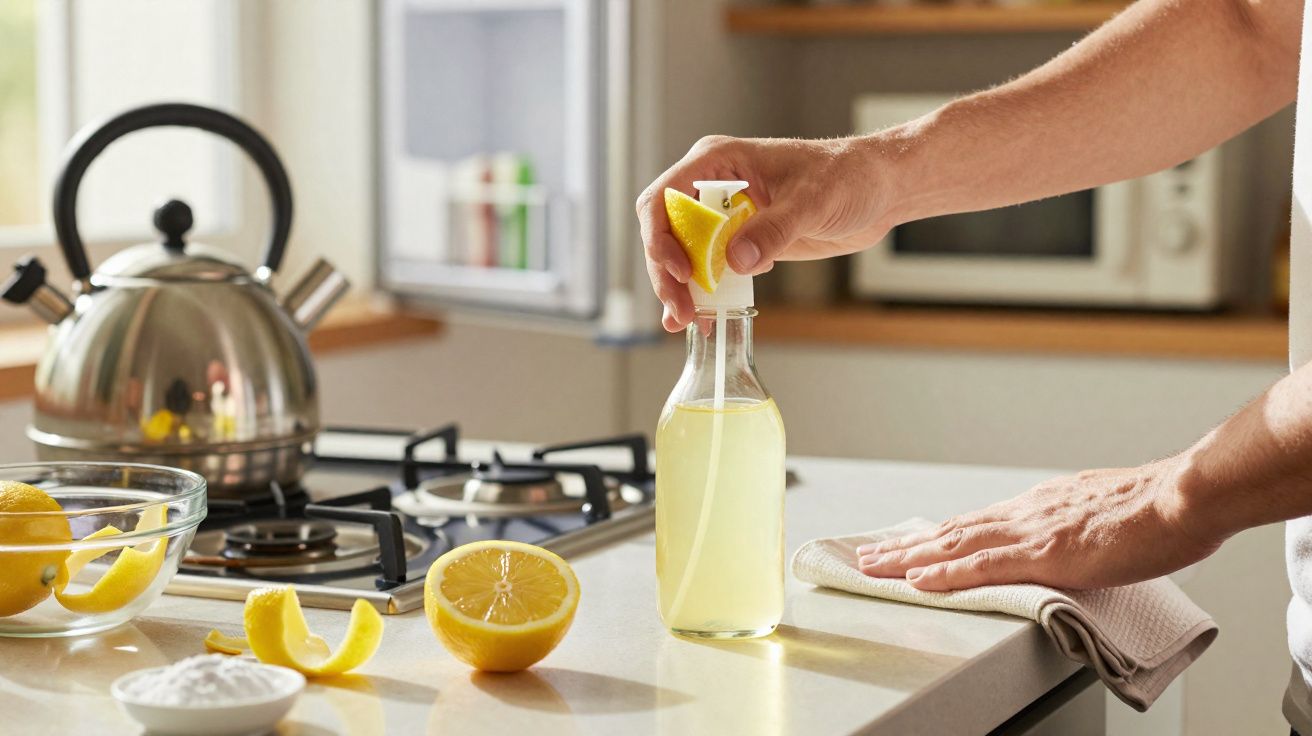
Underrated and unassuming, the lemon is suddenly having a moment - with surprisingly useful results in both the kitchen and the bathroom.
More and more households want cleaning routines that are cheaper and involve fewer harsh chemicals. A lemon behaves like a practical all‑rounder: it smells clean, is inexpensive, and earns its keep in everyday use.
Why the lemon is trending in household cleaning right now
A single lemon brings several handy properties together. Citric acid tackles limescale, D‑limonene (found in the peel) helps shift grease, and the bright citrus scent can reduce lingering smells. That fits neatly with the move towards simpler, more natural household habits.
At the same time, many people are trying to cut packaging waste and buy fewer specialist cleaners. Used correctly, a lemon can stand in for three common products: a descaler, a degreaser, and an odour neutraliser. It may sound like an internet hack, but the results are genuinely reliable when the surface and the strength of the mix are right.
A lemon can replace descaler, degreaser and odour spray - as long as the surface is suitable and the dilution is correct.
Three cleaners the lemon can replace
Descaler for kettles, taps and tiles
Most limescale is made up of calcium carbonate. Citric acid binds (chelates) calcium so the deposit becomes water‑soluble - meaning it can soften and lift without aggressive scrubbing.
- Mix: 150 ml warm water + 50 ml lemon juice
- How to use: Spray onto taps or apply with a cloth. Leave for 5–10 minutes.
- For appliances: Pour the solution into the kettle, warm it briefly, leave for 15 minutes, then rinse thoroughly.
If the scale is heavy, run the process again. Once finished, wipe with clean water. Stainless steel dries more cleanly if you buff it at the end with a microfibre cloth.
Degreaser for hobs, pan bases and cooker hoods
Grease doesn’t dissolve well in plain water. Lemon peel contains D‑limonene, which is lipophilic (it “likes” fats) and can loosen sticky, baked‑on residues. Combined with a gentle abrasive, you get a cleaner that’s mild on surfaces yet effective on grime.
- Paste: 2 tbsp bicarbonate of soda or fine salt + 2–3 tbsp lemon juice
- How to use: Spread onto crusted areas, wait 3–5 minutes, then wipe with a soft sponge.
- For glass‑ceramic hobs: Use lemon juice only (no salt). Leave briefly, then lift with a cloth.
Warmth helps on oven doors: switch the oven on for a short time, let it cool down, then clean. Always test painted or coated surfaces on a hidden spot first.
Odour neutraliser for the fridge, microwave and U-bend
Smells are caused by volatile organic compounds. Lemon juice can bind some of these molecules, while the essential oils help mask what remains. In practice, the freshening effect can last for several days.
- Fridge: Put half a lemon, cut side up, on a plate. Replace after 3–4 days.
- Microwave: Heat a bowl with 200 ml water plus slices of one lemon for 3 minutes. Keep the door shut for 2 minutes, then wipe out.
- U-bend/drain: Pour 50 ml lemon juice into the plughole, wait 10 minutes, then flush with hot water.
Smell gone, film gone: lemon steam in the microwave loosens greasy mist and reduces onion or fish odours in one go.
How the lemon works (quick explanation)
Lemon juice has a pH of around 2. It breaks down limescale because citrate ions bind to calcium, turning stubborn deposits into something you can wipe away. Greasy build‑up responds to D‑limonene from the peel, which helps dissolve oily residues and lift films from surfaces. Finally, the aromatic compounds help cover and reduce lingering odours, leaving a fresher impression.
Where you need to be careful
- Do not use on natural stone such as marble, travertine, limestone and concrete - acid can etch and dull the surface.
- Use only after testing on uncoated aluminium, brass, copper and cast iron - tarnishing is possible.
- Rubber seals and wood may dry out: work quickly and rinse well.
- Coloured fabrics can bleach: check an inconspicuous area first.
Never mix with chlorine bleach or oxygen bleach. Irritant gases and material damage can occur.
Recipes at a glance
| Product replaced | Lemon recipe | Where to use | Note |
|---|---|---|---|
| Descaler | 150 ml water + 50 ml lemon juice | Taps, kettle, shower head | Leave 10 minutes; rinse well |
| Degreaser | 2 tbsp bicarbonate of soda + 2–3 tbsp lemon juice | Hob, oven, pan base | On glass‑ceramic, avoid abrasives |
| Odour spray | Heat lemon slices in water | Microwave, fridge, drain | Refresh several times a week |
Real‑world examples from everyday life
Descale a shower head: Remove it, place it in a container of the lemon solution, wait 30 minutes, then brush the nozzles with an old toothbrush. Flush through with warm water afterwards - the water flow is often noticeably better.
Plastic chopping board: Rub with half a lemon and a little salt, leave for 2 minutes, then rinse with hot water. This helps reduce garlic or fish smells.
Chrome (bike bell or tap): Put a drop of lemon juice on a cloth, polish, then finish with a dry cloth to remove fingerprints.
Cost check and shelf life
A lemon typically costs around £0.45–£0.75 (roughly €0.50–€0.80) and yields about 40–60 ml of juice. For 200 ml of descaling solution, you’ll usually use one lemon, which is enough to descale a small household appliance thoroughly. The peel stretches the value further: use it to wipe greasy splashes or add it to the microwave bowl, creating next to no waste.
Freshly squeezed juice keeps in a screw‑top jar in the fridge for up to 7 days; after that, the effect gradually weakens. If you need larger quantities, freeze the juice in an ice‑cube tray - one cube is roughly 1 tablespoon.
What the lemon cannot do
A lemon is not a full replacement for a true disinfectant cleaner in hygiene‑critical areas. Germs respond differently to organic acids, so for raw‑meat chopping boards or bathrooms where infection risk is higher, targeted disinfection remains the safer option.
Stubborn oven crust made from polymerised fats may require longer dwell time or heat. The lemon paste can help, but it won’t always clear everything in a single pass.
Extra benefits and sustainable lemon tricks
Leftover peel can be dried and then ground with salt using a pestle and mortar to make a mild scouring powder for sinks and ceramic. Another option is to place peel in the cutlery basket of the dishwasher for a cycle - it can freshen the machine and help with light discolouration.
If you live in a soft‑water area, you can dilute the mix more lightly, saving juice and being kinder to materials. In very hard‑water regions, a second round is often better than using an overly strong acidic mix first time.
Added tip: make a reusable lemon spray for day-to-day wipe-downs
For quick cleaning between deeper sessions, keep a small spray bottle of 150 ml water + 50 ml lemon juice ready in the fridge. Label it and use it for splash marks on taps, the sink edge, and tile haze - then rinse and dry. This isn’t a disinfectant, but it’s a convenient, low‑waste routine for visible residue.
Added tip: use lemon responsibly to protect finishes
After using lemon on metal or glazed surfaces, rinse and dry rather than letting it air‑dry. This simple step reduces the chance of dull patches, water marks or residue - especially on stainless steel and chrome.
A small chemistry box for home
Citrate complexes dissolve in water - that’s why limescale rings can vanish after treatment. Limonene dissolves fats because its molecules have non‑polar regions. Together, they cover a large share of everyday kitchen problems.
A practical rule of thumb: acid for limescale, oil for grease, fragrance for odour - and the lemon delivers all three without extra additives.





Comments
No comments yet. Be the first to comment!
Leave a Comment