
Cleaning jewellery wisely protects gemstones and saves you expensive trips to the jeweller - in both money and time.
Many rings, chains and earrings lose their sparkle over time. Skin contact, air exposure and cosmetics all leave their mark. With the right approach, the shine comes back without scratches, without hassle and without turning your kitchen worktop into a chemical battleground.
Why jewellery loses its shine
Silver reacts quickly with sulphur-containing compounds in the air, forming a dark layer on the surface. Sweat, humidity and hand cream speed this up. Bath water containing chlorine or salt can also attack metals. With gold-plated pieces, the thin top layer gradually wears away, allowing the base metal to show through and discolour.
Gemstones behave very differently. Pearls, turquoise and opal are porous, meaning they absorb liquids and fragrances. Emeralds are often oiled in the workshop, and harsh cleaners can strip away that protective treatment. In costume jewellery, heat and strong alkaline solutions can weaken or destroy glued settings. Tailoring the cleaning method to the materials prevents unnecessary damage.
The kitchen trick with foil and bicarbonate of soda for silver jewellery
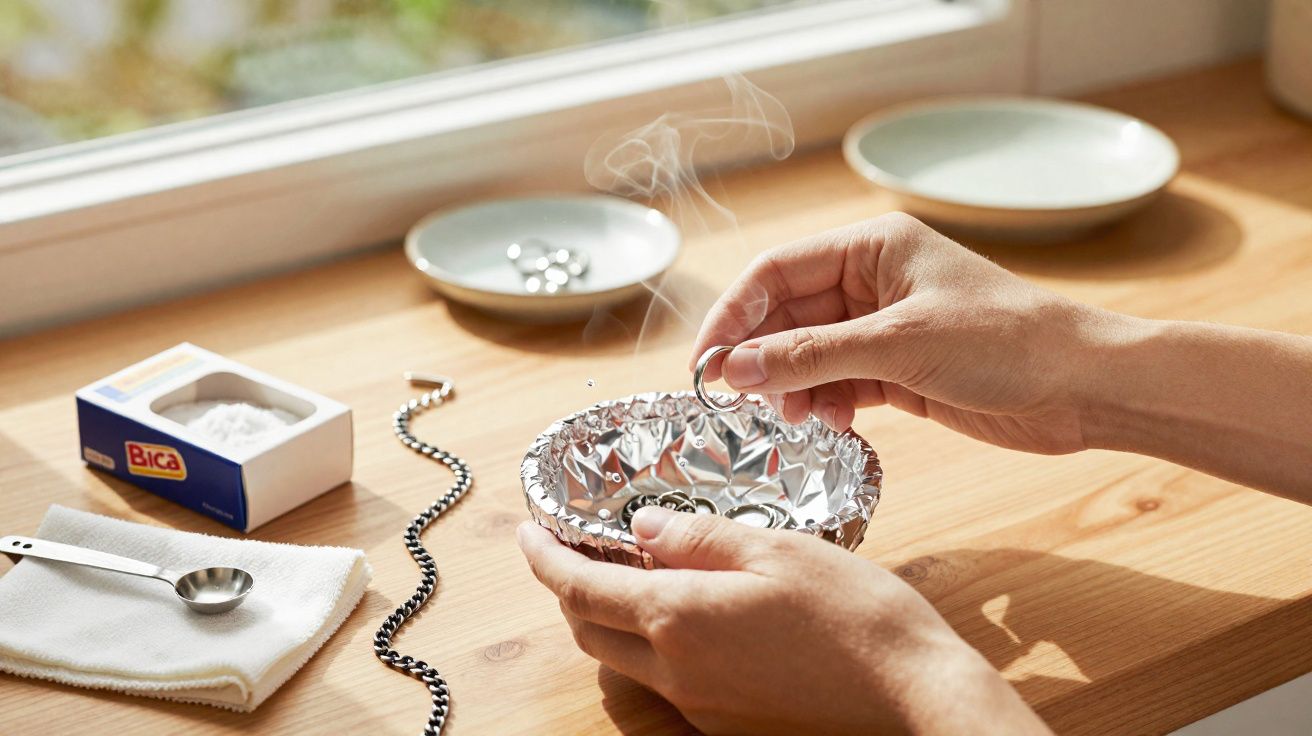
For tarnished silver, a simple at-home method works well using hot water, aluminium foil and bicarbonate of soda. The key is an electrochemical reaction that lifts the dark tarnish layer without any abrasive scrubbing.
Step by step
- Boil water - enough to fill a small bowl.
- Line the bowl with aluminium foil, with the dull side facing down.
- Place the silver jewellery inside; remove delicate stones first if possible.
- Add two tablespoons of bicarbonate of soda.
- Pour over the boiling water until everything is fully covered.
- Leave for 10–15 minutes, depending on how heavy the tarnish is.
- Rinse with lukewarm water and dry immediately with a soft cloth.
Suitable only for solid silver without porous stones. Rinsing quickly and drying thoroughly helps prevent the tarnish returning.
What happens chemically
In an alkaline environment, aluminium and silver form a galvanic pair. The bicarbonate of soda raises the pH, allowing electrons to flow from the aluminium foil to the tarnished silver surface. The sulphur compounds on the silver are reduced, the foil effectively sacrifices itself, and the silver regains its brightness.
Take care by material and type of stone
| Material | Foil + bicarbonate of soda | Gentle alternative |
|---|---|---|
| Solid silver | Very suitable | Impregnated polishing cloth for detailed work |
| Silver with intentional patina | Do not use | Clean only specific areas, rub dry |
| 14/18-carat gold | Little effect | Lukewarm water, mild bar soap, soft brush |
| Gold-plated / rolled gold | Risky for the coating | Very brief soapy soak, dry quickly |
| Pearls, opal, turquoise, coral | Never | Damp cloth only, no soaking |
| Emerald (oiled) | Never | Wipe gently when dry |
| Costume jewellery with glued parts | Never (heat risk) | Spot-clean with a cotton bud |
Never put gold-plated chains, deliberately patinated pieces or porous stones into the foil-and-bicarbonate solution. In these cases, soapy water is the safer option.
Avoid these common mistakes
- Stiff brushes can scratch surfaces.
- Longer soaks do not improve results - they only increase risk.
- Mixing different metals in the same bath can cause unwanted reactions.
- “Half-drying” (leaving moisture behind) encourages immediate re-tarnishing.
- Toothpaste and scouring powders create fine scratches.
Everyday care
Put jewellery on only after perfume and moisturiser have absorbed. Remove it before showering, swimming pools and the sea. In the evening, wipe pieces with a microfibre cloth. Store jewellery dry and away from light. Zip-seal bags and anti-tarnish strips help reduce the effect of sulphur in the air.
Store different metals separately so they do not rub against each other. A small silica gel sachet lowers moisture inside a jewellery box. An impregnated cloth is ideal for quick touch-ups and can reduce the need for bigger cleaning sessions.
After any contact with water: rinse with clean water and dry completely - including inside chain links and beneath settings.
Costs, tools and alternatives
The kitchen trick costs only a few pence. A professional cleaning bath at a jeweller often costs roughly €15–€30 per simple piece. Home ultrasonic cleaners typically sit around €40–€100. They can pull grime from tight gaps, but they may loosen glued parts and can be unsuitable for pearls. Coated pieces are also a risk in ultrasonic cleaning.
Commercial silver dip solutions work fast but use strong reducing agents. If you use them, wear gloves, ensure good ventilation and rinse for a long time afterwards. It is best to use them rarely, and only for heavy build-up. A polishing cloth gives you more control and helps preserve intentionally darker areas.
Questions from real life
How often should you clean?
If you wear silver weekly, it usually benefits from a light refresh every 4–6 weeks. In humid areas, or if you do lots of sport, every 3 weeks may be more realistic. Solid gold generally only needs an occasional wash in warm soapy water.
Patina or wear?
Tarnish typically appears as an uneven grey-to-black film and can be removed with a cloth or a bath. Worn gold plating tends to look warmer - coppery or brass-toned. No cleaning bath will restore the original colour; only re-plating will.
What to do with a jet-black chain
Start with foil and bicarbonate of soda. If some areas remain dark, move on to a silver cleaning rubber or a polishing cloth. Avoid thinning edges or wearing down details. Sandpaper and abrasive pastes belong in a workshop, not at home.
Additional practical guidance: safety, storage, value
Work close to the sink, and use oven gloves or protective gloves to avoid burns from boiling water. Cover surrounding surfaces so nothing becomes stained. Regularly check clasps and claws/prongs. A quick inspection at a jeweller is often under €20 and can prevent stone loss.
Keep records of your pieces: photographs, hallmarks such as 925 or 750, and purchase dates. This makes servicing and insurance far easier. A simple routine is effective: microfibre wipe after wearing, a gentle bath once a month, and a visual check every quarter. That way, jewellery stays bright without unnecessary wear.
Added value for everyday life
Skin pH, diet and your surroundings all play a part. If you cook eggs frequently or live in areas with higher sulphur pollution, you will often see tarnish sooner. Airtight bags with anti-tarnish strips - with as little trapped air as possible - slow the process. Bicarbonate of soda works reliably, whereas baking powder is less dependable because it contains additives.
If you wear white gold, it is worth understanding rhodium plating. A thin rhodium layer protects the metal and gives a cooler shine, and it can be renewed after a few years. Re-plating typically costs noticeably more than cleaning, but the results last much longer.
If you own an ultrasonic cleaner, trial it first on an unimportant item. Never put watches in the water (especially with a crown), and avoid pearls and anything with glued components. One final small step that makes a big difference: once the piece is dry, warm-breathe on it briefly and seal it in a bag - any remaining moisture doesn’t stand a chance.






Comments
No comments yet. Be the first to comment!
Leave a Comment