
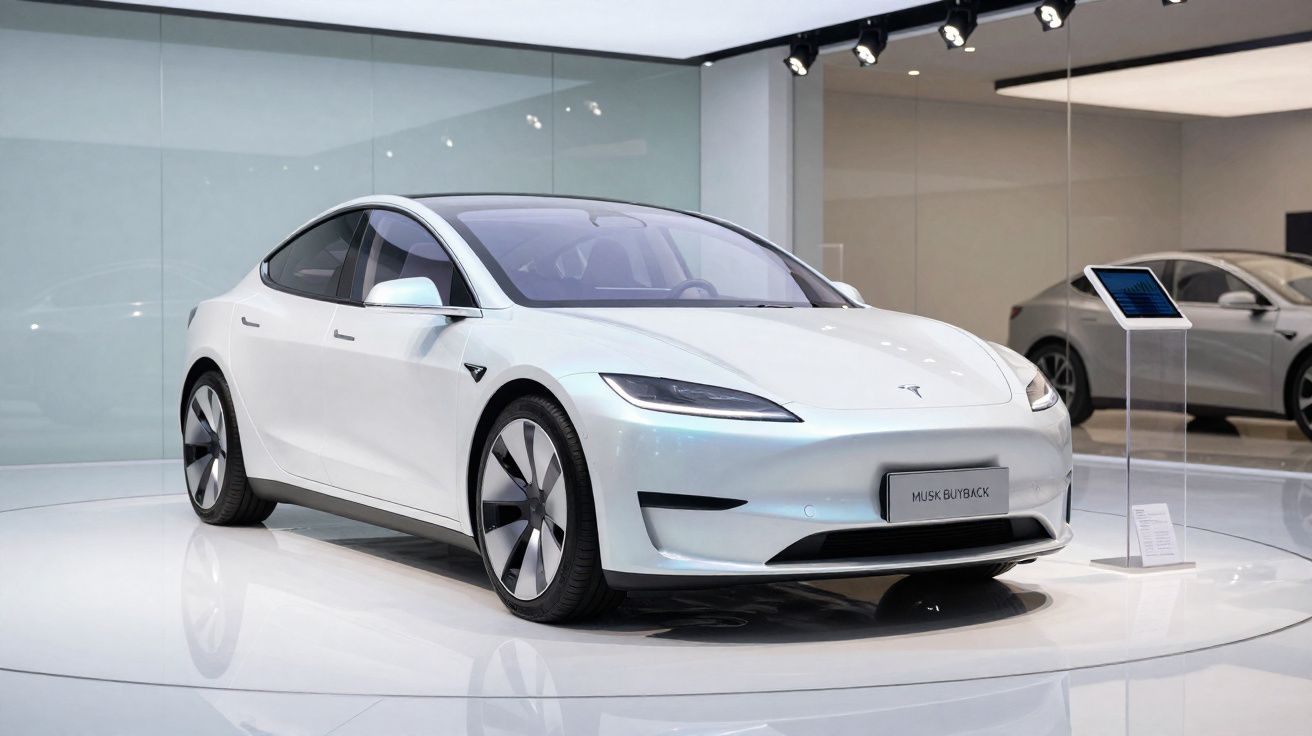
The Tesla sales rep at the Austin showroom looks worn down. Not the usual end-of-shift sort of tiredness, but the drained expression of someone who has delivered the same script-price cuts, tax credits, and “great financing options”-to a stream of visitors who nod, smile, and then leave anyway. Behind him, a Model Y rotates in slick, high-gloss 3D on a huge screen. Outside in the car park, the story feels less polished: a line of nearly new Teslas wearing “demo” tags, their prices quietly trimmed.
He drops his voice as though he’s letting you in on something: “We’re buying some back from customers now. It makes the numbers look better. Musk wants them off the road at those prices.”
Electric cars were meant to be an easy sell.
Now their loudest advocate is starting to look like he’s trying to purchase his own hype back.
When the world’s richest car salesman starts buying his own cars
Speak to Tesla owners at the moment and you’ll often hear an odd blend of satisfaction and buyer’s remorse. Satisfaction with the software, the acceleration, and that unmistakable sense of piloting “the future”. Remorse when they open the app, check today’s pricing, and realise their supposed “investment” has fallen faster than a meme cryptocurrency.
That mood sets the scene for the latest development: Elon Musk quietly leaning into buybacks and trade-ins to shore up softening demand. Tesla is taking cars back on punchy terms, reworking them into “certified pre-owned deals”, and sending them out again-almost like reruns from a once unstoppable series that’s starting to lose its audience.
On a spreadsheet, it can be presented as optimisation. From the outside, it reads more like anxiety dressed up as efficiency.
A software engineer in California described his experience on X: he bought a new Model 3 Performance in late 2023. Six months on, Tesla had pushed price cuts so hard that an equivalent brand-new car was priced only a whisker above what he still owed on the finance.
When he challenged it, Tesla didn’t offer an apology-it offered a route back into the machine. The proposal was to buy back the car, roll whatever equity remained into a new agreement, and place him in a “newer” model with a small discount. It helps delivery numbers, it helps the quarter, and it does very little for a customer’s confidence that they’ve made a sensible financial decision.
Most people recognise that sinking feeling: the item you believed was scarce suddenly sits on a clearance rack.
From Tesla’s perspective, buybacks are simply another lever. With demand cooling and Chinese EV competitors pushing prices down, the old “order now and wait months” aura has thinned out. To keep factories humming, the company has chosen the bluntest weapon: price and volume. That translates into cutting list prices, stacking incentives, and-when it suits-repurchasing vehicles to manage inventory and support used values.
There’s also a behavioural play at work. If used prices fall through the floor, would-be buyers get nervous about buying new. So Tesla steps in, scoops up cars, and tries to shape the market-like an over-energetic landlord buying flats back to re-let them at a controlled rate.
On an earnings call, Musk described it as “protecting the ecosystem”. Many investors heard a different message: protecting the appearance of unstoppable demand.
The new “game” of Tesla ownership: buy, panic, renegotiate
For customers, this shift has turned purchasing a Tesla into a strange, rapid-fire negotiation loop. You place an order, watch the price change two or three times before delivery, then arrive at the showroom already doing mental arithmetic about how quickly you might need to sell.
Experienced owners increasingly treat each Tesla like a smartphone upgrade cycle rather than a long-term car purchase. Some even try to time orders around rumoured price cuts or end-of-quarter delivery pushes, gambling that Tesla wants one more handover more than it wants a steady price curve. In that context, buybacks become a neat “reset” button-for Tesla and the driver-provided you accept a loss and agree to keep playing.
A telling example surfaced in Germany this spring. A family leasing a Model Y noticed Tesla advertising cheap financing on near-identical cars online, alongside generous trade-in estimates. They asked for a quote out of curiosity.
The figures didn’t perfectly stack up, but they were close enough that a Tesla adviser encouraged them to “upgrade” early. Tesla would take the existing car, label it a used unit, and send the family away in a slightly newer build for a similar monthly payment. They left feeling both relieved and unsettled, as if their car had become a token in someone else’s quarterly bonus contest.
From a market standpoint, Tesla’s buyback push looks like damage limitation. Strong resale values used to be one of the brand’s sharpest selling points; early Model 3s held value like gold. That narrative fractured as rivals arrived and price wars became the norm.
Now Tesla is effectively operating on both sides of the table: selling new cars, buying its own used stock, and then selling it again. That gives one brand an unusually strong grip over a vehicle’s life cycle.
And if we’re being honest, almost nobody reads the small print on long-term value when they’re clicking “Order” on a gleaming, feature-packed car at midnight.
Tesla buybacks and trade-ins: how to stay afloat on the roller-coaster without losing your shirt
If a Tesla appeals to you today, the most sensible approach is to think like an investor rather than a superfan. Begin by tracking price history over several months. Tesla shifts list prices the way streaming platforms test subscription tiers, and those movements feed straight into your future resale value.
Next, compare new offers with used options-including Tesla’s own certified pre-owned deals. That “lightly used” Model Y tucked at the edge of the forecourt may be little more than last month’s panic trade-in wearing a new label. If you time it well, you can benefit from Musk’s urgency rather than being squeezed by it.
A practical rule helps: decide upfront how long you plan to keep the car, and define what level of loss you can tolerate when that period ends.
Many new owners buy into the excitement and then spiral the moment a big price cut lands on their exact model. They rush to trade in, accept a brutal valuation, and end up locking in a larger loss than if they’d simply kept the car and carried on.
A steadier approach is to treat a Tesla like any fast-depreciating piece of tech. Your phone loses value the second it leaves the box, yet you don’t check its resale price every week. Apply the same logic: budget for depreciation, then actually drive the vehicle.
If you do explore Tesla’s buyback offers, treat them as one option among many-not a rescue package sent by a benevolent genius.
One additional point that often gets missed: insurance and repair timelines can shift the economics as much as list prices. Premiums may rise sharply for certain trims, and waiting times for body repairs can be longer than drivers expect, especially after minor collisions that involve sensors and camera calibrations. Those costs don’t always show up in the “monthly payment” conversation, but they can make a big difference over a year or two.
It’s also worth paying attention to how you fund the car. Whether you use PCP, hire purchase, or leasing, the structure changes who carries the depreciation risk. Leasing can feel less emotionally bruising when prices swing, but it may cost more overall and comes with mileage and condition rules. Ownership gives you flexibility, but it also leaves you more exposed when Tesla moves the goalposts overnight.
Tesla owner forums are full of blunt guidance at the moment: “Musk is playing a numbers game. The only way to win is to know you’re in a game and set your own rules first.”
- Set your priorities: lowest monthly payment, stronger long-term value, or cutting-edge tech?
- Check third-party resale sites before accepting any Tesla trade-in figure.
- Time your purchase: end-of-quarter periods often bring softer pricing.
- Consider leasing if rapid depreciation makes you uneasy.
- Screenshot every price you see from Tesla before and after you place your order.
A brand caught between myth and metal
The most unsettling aspect is the gap between the story people tell about Tesla and the reality on the ground. In the public imagination, Tesla still feels like the brand with endless waiting lists, factories running flat out, and enthusiasts prepared to queue for the latest model. In showrooms, staff are dealing with cautious buyers, an ageing line-up, and a CEO who can pivot from robotaxi fantasies to savage price cuts in a single post.
Musk buying back his own cars captures that contradiction perfectly. On one side stands the visionary insisting demand is “insane”. On the other is the chief executive quietly pulling vehicles back into the fold to stop the narrative cracking too loudly. Both can be true, depending on which spreadsheet you’re staring at.
For drivers, this is where it becomes personal. You’re not only choosing a car; you’re buying into an ecosystem shaped by one man’s appetite for risk and theatre. The upside is obvious: sophisticated software, a charging network that generally does what it says on the tin, and a genuine sense of stepping slightly ahead of the present.
The downside is harder to pin down but just as real: volatile prices, moving targets around Full Self-Driving, and the nagging suspicion that your shiny new purchase could be discounted heavily three months later if a quarterly report disappoints. That’s the compromise hidden beneath the glossy promotional videos.
Ultimately, the question isn’t whether Elon Musk is desperate. It’s whether this kind of managed chaos can last for a car brand that increasingly behaves like a tech stock rather than a family purchase. People still want electric cars-lower running costs, fewer routine maintenance jobs, and that quiet, instant torque when you press the accelerator.
But the emotional temperature around Tesla is shifting. Excitement is giving way to caution: a wary respect mixed with fatigue. Buyers are better informed, regulators are tougher, and competitors are more confident. If Musk continues buying back his own cars to keep the dream intact, the market will eventually ask: whose dream is being protected here-his, or ours?
That conversation is already bubbling up in showrooms, group chats, and late-night searches for “Tesla resale value 2026”.
| Key point | Detail | Value for the reader |
|---|---|---|
| Understand Tesla buybacks | Musk’s company is using trade-ins and repurchases to support sales and used prices | Helps you spot the strategy behind sudden offers on your car |
| Time your purchase | Prices move quickly, especially around quarter ends and new incentives | Improves your chances of buying near a local low, not at the top |
| Think like an investor | Treat the car as fast-depreciating tech, not a stable asset | Cuts frustration and reduces financial surprises over the vehicle’s life |
FAQ
- Is Tesla really buying back cars from customers? Yes. Tesla is increasingly using trade-ins and buybacks to manage inventory, support used prices, and keep delivery numbers strong from one quarter to the next.
- Does that mean Tesla is in trouble? It suggests Tesla is operating in a harsher, more competitive market. Buybacks point to pressure on demand and pricing, but they don’t automatically mean the company is on the verge of collapse.
- Will my Tesla lose value faster because of these price cuts? Rapid price cuts usually damage resale values, particularly for recent buyers. Older models may already have absorbed much of the drop and can be less affected.
- Should I wait to buy a Tesla right now? If depreciation worries you, waiting a few months to observe pricing patterns can help. If driving electric now matters more, you may decide the volatility is simply part of the deal.
- Are Tesla’s trade-in offers fair? Sometimes they are competitive and sometimes they aren’t. Compare Tesla’s figure with third-party resale sites and local dealers before agreeing to anything.



Comments
No comments yet. Be the first to comment!
Leave a Comment