
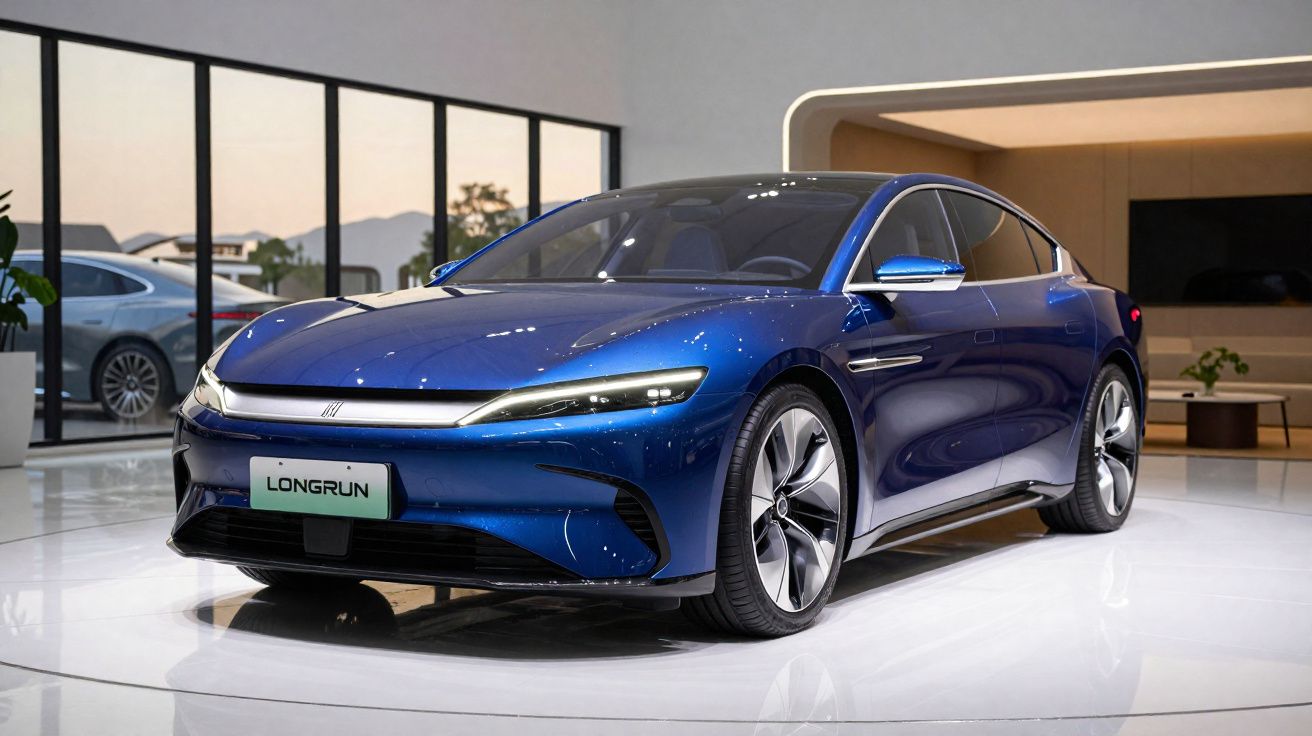
Two hours later you’re already heading back out again. The car has barely had a chance to “rest”… and yet it’s exactly this kind of back‑and‑forth that wears it out fastest. Not the big summer road trip, not the motorway run down to the coast. It’s the quick dash to the supermarket, the school run, the ten minutes to work in the rain. That’s when the engine takes a beating in silence. The air still carries that cold‑fuel smell, as though nothing under the bonnet ever properly got going. What if the short trips you treat as harmless are actually the toughest thing you do to your car?
Why your car engine secretly prefers long motorway slogs
There’s an odd truth to driving in the UK: the long cross‑country journey that feels exhausting for you is often gentler on the vehicle than a casual five‑minute hop to the corner shop. Engines thrive on consistency-steady revs, properly warmed oil, and extended running without interruptions. What really grinds them down is the cycle of starting, stopping, cooling off and starting again.
With short trips, the engine rarely reaches full operating temperature. The metals don’t expand to their intended tolerances, moisture doesn’t burn off, and fuel doesn’t vaporise as cleanly. The whole system operates in a slightly rough, half‑ready state. Over weeks and months, that near‑warm condition becomes a slow, unseen enemy. You won’t necessarily hear anything or spot an obvious symptom, but the wear quietly accumulates.
Imagine a freezing January school run in a small British town. You fire the car up, scrape the windscreen, and reverse out while everything is still cold and tight. Three minutes later you’re idling in the queue by the gates. A couple of minutes after that, you’re back home. Total running time? Perhaps eight minutes. Multiply that by two runs a day, five days a week, all winter.
In that pattern, the exhaust barely heats through, condensation builds up, and the oil stays thick and reluctant. A car like this might cover only about 6,400 km a year and still end up with an engine that looks and behaves “older” than a motorway commuter’s doing roughly 19,300 km a year of steady running. It feels backwards, but an engine is built more for endurance than repeated sprints from cold.
There’s sound engineering behind it. Internal combustion engines are designed to work best at a set temperature-commonly around 90°C for coolant, with the oil reaching a similar region once fully warmed. Below that point, mechanical clearances are less than ideal, fuel atomisation worsens, and the engine management system often enriches the mixture to keep combustion stable.
That richer fuelling has consequences. Small amounts of fuel can wash the protective oil film from cylinder walls. Cold components don’t seal as effectively, so unburnt fuel and combustion residues can slip past the piston rings into the oil. Water vapour produced during combustion can condense in the crankcase. On a proper long run, heat and time help evaporate moisture and burn off contaminants. On a short hop, those contaminants remain, gradually attacking bearings, timing chains and seals. Long drives allow the engine to “self‑clean” through sustained temperature; short trips trap it in its most vulnerable phase.
It’s also worth remembering that modern cars add extra electrical load during cold starts-heated screens, blowers, lights-so short journeys can become a double hit: the engine doesn’t get fully warm, and the 12‑volt system doesn’t get enough time to recharge properly.
How to treat a short‑trip car engine like a long‑distance athlete
You can’t magically turn a 5 km commute into a motorway cruise, but you can shift the odds in your favour. Start by combining errands. Instead of three separate five‑minute drives, aim for one 25‑minute loop while the engine is already warm. Those uninterrupted minutes at stable temperature matter more than most people realise.
After starting up, avoid long idling on the drive. Give it 20–30 seconds, then move off smoothly, keeping revs low and driving gently. That brings the engine and oil up to temperature faster and more evenly than sitting stationary, which tends to warm slowly while the mixture stays rich and sooty. If you have access to a second car, it can make sense to use an older “runabout” for the very shortest hops, sparing a newer or more valuable vehicle from constant cold starts.
For short‑trip drivers, maintenance moves from “nice to have” to essential. Regular oil changes become non‑negotiable, because oil in a short‑run car contaminates more quickly with fuel dilution and moisture. And when you plan routes, consider flow rather than distance: a slightly longer drive with fewer junctions and less stop‑start can be kinder than a shorter rat‑run through town.
One more practical angle many people overlook: if your usage is mostly short trips, make sure the car has the correct oil specification for your engine (not just the right viscosity), and consider more frequent checks of oil level and coolant level. Small issues can escalate faster when an engine spends most of its life warming up rather than running steadily.
Let’s be realistic: almost nobody optimises daily life around what an engine would prefer. You shouldn’t have to. But changing one or two habits-adding a weekly longer spin, avoiding switching off immediately after a hard run, or letting a turbocharged car cool by cruising gently for the last few minutes-can postpone expensive problems by years.
“Short journeys are basically the mechanical version of smoking,” quips a seasoned independent mechanic in Birmingham. “You might get away with it for ages-until the cough turns out to mean something.”
A simple weekly routine can rebalance the damage:
- Once a week, take the car for 25–30 minutes at a steady speed, ideally on A‑roads or a dual carriageway.
- If most of your driving is urban and short‑hop, change the oil and filter sooner than the handbook interval.
- Use good‑quality fuel and, on newer cars, avoid constantly disabling stop‑start during cold weather unless you have a specific reason.
None of this is glamorous. It’s quiet, boring mechanical kindness-and it works.
What short trips really cost you (and it’s not just engines)
The downside of short trips goes beyond engine longevity. Exhaust systems can corrode from the inside out because condensation never gets hot enough to evaporate. Diesel particulate filters (DPFs) can clog because the car doesn’t spend long enough at the temperatures needed for regeneration. Even the 12‑volt battery suffers: it’s repeatedly drained by starting, then denied a long enough run to recover.
From the driver’s seat, the impact often shows up as nagging doubt-warning lights appearing “too early” for the mileage. A diesel used mostly for five‑minute school runs can feel jinxed with DPF warnings, limp mode and rough running, while a neighbour’s motorway‑driven car seems indestructible at double the distance. It isn’t luck. One vehicle spends its life at operating temperature; the other lives permanently in warm‑up mode.
Eventually, you can find yourself in a workshop being told a low‑mileage car needs a timing chain, a turbo clean, or a replacement DPF. The quote feels wildly out of proportion to what the odometer says. That’s the hidden invoice for years of short‑hop duty-less about bad fortune, more about physics collecting its debt.
And there’s a human reality, too. On a cold morning when you’re late, nobody wants to think about oil viscosity or combustion by‑products. With children shouting in the back on a wet school run, engine wear is the last thing on your mind. That’s normal.
Still, once you understand what repeated short trips do inside an engine, it’s hard to ignore. Knowing a few simple tactics doesn’t mean living like a monk of mechanical virtue. It means giving the car an occasional longer run, letting it properly reach operating temperature once a week, and not being fooled by “low mileage” on a used car that has spent its entire life doing local hops. Short trips punish engines more than long drives because they trap them in the least protected state: half warm, half lubricated, never quite where the design expects them to be.
| Key point | Detail | Benefit to you |
|---|---|---|
| Cold starts are brutal | Tight clearances, thick oil and a richer fuel mixture increase wear in the first few minutes | Makes it clear why short journeys can age engines faster than motorway distance |
| Short trips trap moisture and fuel in the oil | Condensation and fuel dilution often don’t evaporate on very short runs | Shows why frequent oil changes matter more for city cars and school‑run use |
| One weekly longer drive helps | 25–30 minutes at steady speed lets the engine reach full operating temperature | A simple habit that can extend engine life and reduce the risk of expensive repairs |
FAQ
How short is “too short” for an engine?
As a rule, anything under about 10–15 minutes of running from cold often means the engine hasn’t properly warmed through. The occasional short trip won’t ruin a car; it’s the daily routine that causes the most harm.Does idling to warm up the car help protect the engine?
Not much. Extended idling warms up slowly, keeps fuelling richer for longer and can encourage deposits. Driving gently soon after starting is usually kinder and heats the whole drivetrain more evenly.Are diesels worse than petrols on short trips?
Modern diesels are typically more vulnerable on short hops because of DPFs and complex emissions systems. They benefit from longer runs to regenerate and stay clean, while many small petrol engines cope a bit better with frequent urban use.Can regular oil changes really offset lots of short journeys?
They can’t erase every effect, but they significantly reduce damage from moisture and fuel contamination. With heavy short‑trip use, many mechanics recommend cutting the official oil‑change interval by around half.Is an ex‑motorway car with high mileage safer than a low‑mileage city car?
Quite often, yes. A well‑maintained car that has mainly done long, steady runs can be mechanically healthier than a low‑mileage vehicle used almost exclusively for short urban journeys. Mileage alone doesn’t tell the full story.






Comments
No comments yet. Be the first to comment!
Leave a Comment