
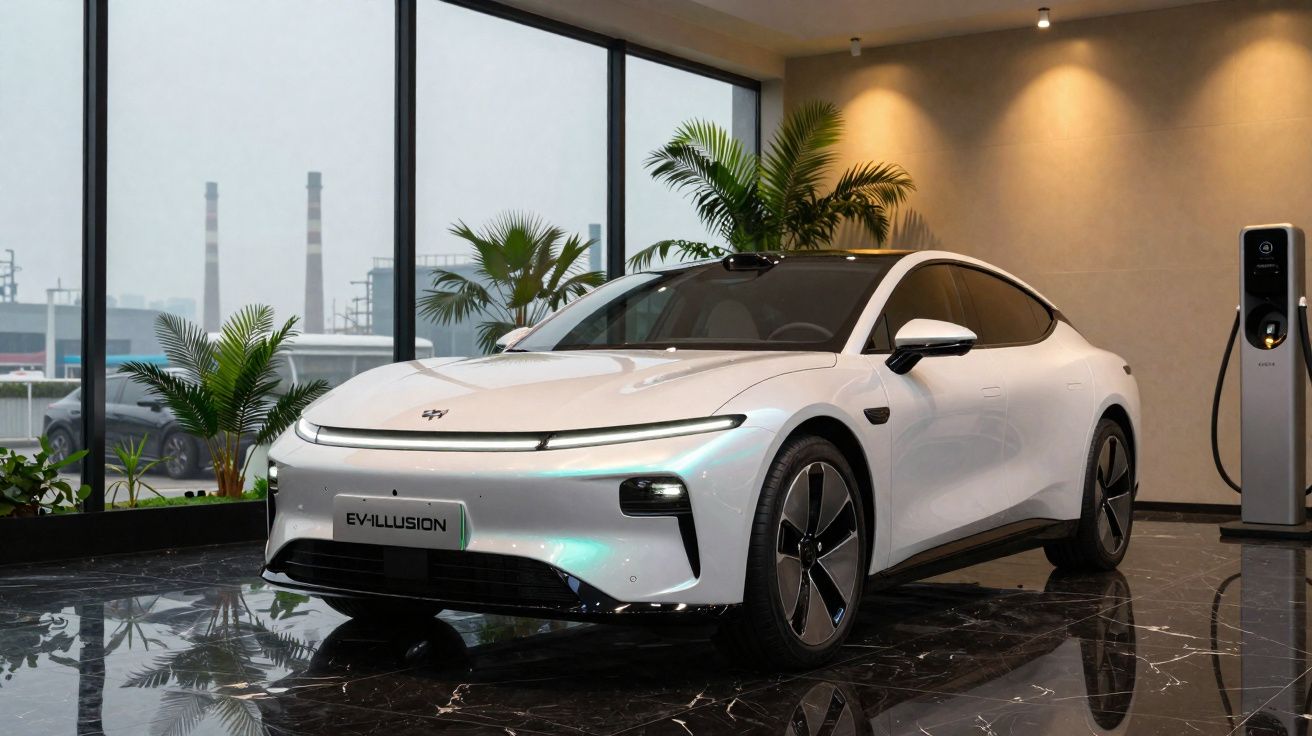
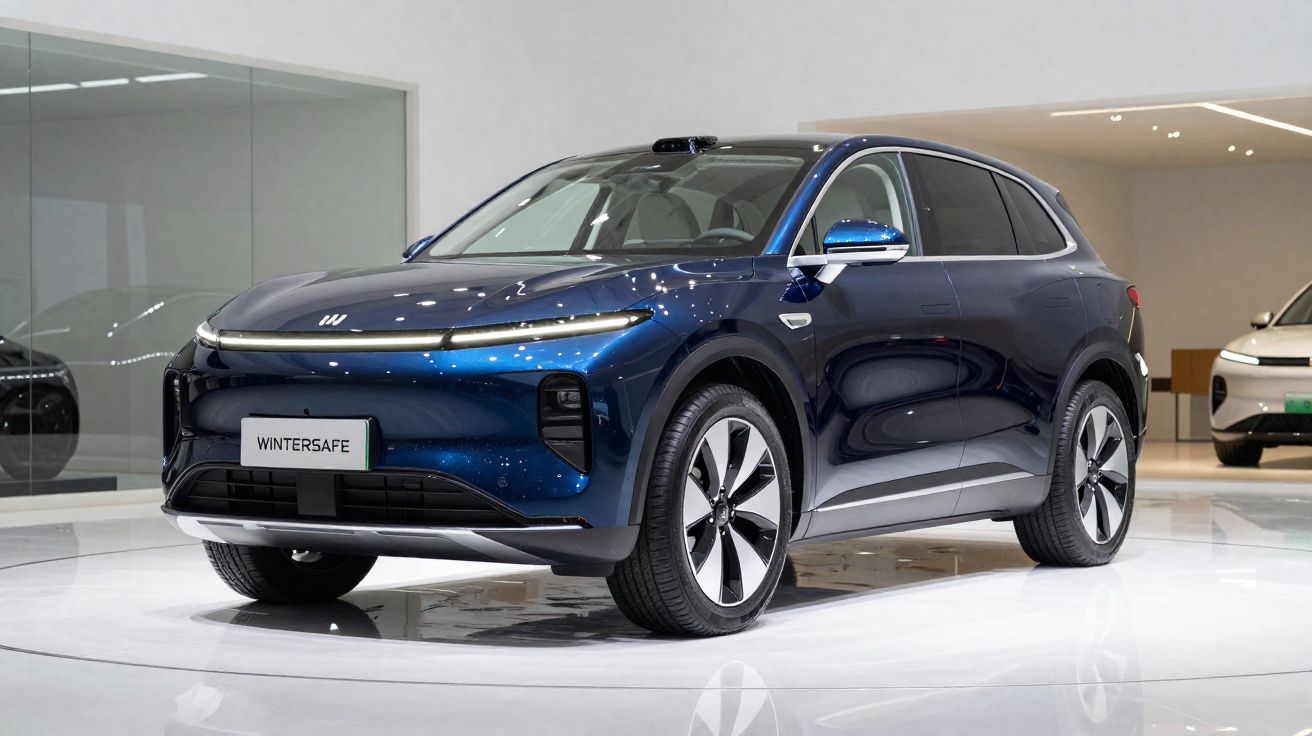
The salesman eased the key card across the gleaming desk as though he were handing over a VIP pass. Out on the forecourt, under harsh white showroom lighting, an electric SUV sat quietly lit, almost theatrical in its stillness. No growl from an engine, no exhaust haze-just a gentle electronic ping as the door released. “You’re making the right choice,” he said, equal parts reassurance and rehearsed pitch. “This is how we save the planet.”
Driving home, the new owner, Léa, felt a small surge of satisfaction each time she slipped past a soot-belching old diesel. On the display, animated butterflies and green leaves floated across the screen. The companion app applauded every “eco-friendly journey”.
A few months later, she would learn what sat behind that serene dashboard: where her battery began its life.
That was the moment the unease started to dig in.
Electric cars, or how we bought a clean conscience
Walk around any major city now and you can almost feel the story in the air. Electric cars queued at charging stations, blue LEDs pulsing; glossy campaigns promising a “zero-emission future”. Drivers climb out looking a touch more upright, as if they’ve selected the ethical lane as well as the faster one.
It seems like a neat bit of maths: no tailpipe, no shame. No diesel badge, no scandal. And yet a stubborn question keeps resurfacing. What if we’ve swapped the outfit while leaving the plot untouched?
Norway is often held up as the electric promised land. In 2023, close to 80% of new cars sold there were electric. The streets feel calmer, air quality in city centres improves, and the billboards are all green peaks and smiling families topping up their batteries beside the fjords.
But those same vehicles are delivered on steel ships burning bunker fuel, and their batteries often make continent-spanning journeys before they ever reach a driveway. Reports from the Democratic Republic of Congo describe children working in open pits to extract cobalt. Satellite imagery highlights lithium-rich areas in South America where water tables are dropping and groundwater becomes harder to reach.
That whisper-quiet pause at the traffic lights stops sounding quite so spotless when you zoom out beyond the kerb.
This is where the comparison with the diesel scandal stops feeling melodramatic. Then, the deception lived inside code-cheating software buried in engine control units. Now the misdirection feels more dispersed: threaded through advertising, simplified policy messages, and our own hunger to feel we’re doing the decent thing.
Electric cars do reduce urban pollution and eliminate tailpipe CO₂-there’s no disputing that. But the full picture also includes battery production, electricity generation, rare metals, and what happens when those large batteries reach end of life. The real balance sheet is far less tidy than the showroom dream.
The danger isn’t that EVs are “evil”. It’s that we’ve elevated them into a moral shield, in the same way “clean diesel” once became a comfortable story.
Electric cars and the hidden cost behind the plug
To understand an electric car properly, it helps not to begin at the charging point, but at the start of its supply chain: in the ground. Imagine a parched plateau in Chile, where turquoise brine ponds sit evaporating beneath a vast, empty sky. Heavy lorries rumble past in a haze of dust. Water is pulled from underground salt flats to extract lithium, while nearby communities watch wells fall lower year after year.
From there, the trail runs through refineries and chemical plants, on to gigafactories and container ports, and across oceans. Only at the end of this long procession does the battery disappear neatly beneath the floor of a pristine new car-sold as a symbol of a future without guilt.
Léa stumbled into this rabbit hole one evening, scrolling through a report on her phone. The compact electric SUV she bought to replace her old diesel is fitted with a 60 kWh battery. According to several life-cycle studies, that battery alone may have been responsible for several tonnes of CO₂ before the car had turned a wheel on public roads.
She read about workers in Indonesia living beside nickel processing sites, about toxic waste entering coastal waters, and about local fishermen who can no longer rely on their usual catch. She also realised her “zero-emission” claim depended heavily on her country’s electricity mix. Where the grid is dominated by coal, the emissions don’t vanish-they relocate, shifting from the roadside to the power station.
“Have I bought a cleaner car,” she wondered, “or just a cleaner conscience?”
Here’s the awkward arithmetic. An electric car generally only outperforms a modern petrol or diesel after tens of thousands of kilometres, once its heavier manufacturing footprint is paid back through cleaner driving. In places with lots of renewables or nuclear power, that break-even point arrives sooner. In regions reliant on coal, it can be pushed much further into the future.
Politicians rarely foreground that kind of nuance. It’s far simpler to announce a ban on combustion engines from a certain year, subsidise EVs, and call it climate leadership. Car makers gladly echo the message, draping forests and oceans across their adverts. And consumers-worn down by constant eco-anxiety-hold tight to a comforting storyline: buy this car, and you’re on the right side.
Let’s be frank: almost nobody reads an 80-page life-cycle assessment before signing a lease.
There is also a growing second act that rarely features in showrooms: what happens after the first owner. Battery health, refurbishment, and “second-life” uses (such as stationary storage) can extend value and reduce waste, but they depend on transparent diagnostics and viable markets. Recycling is improving too, with more capacity emerging in Europe, yet collection systems, economics, and standards still lag behind the speed of new sales.
And then there’s the question of fairness. Home charging, off-street parking, and access to cheaper overnight electricity are not evenly distributed. For many renters and city residents, the “electric transition” can feel less like progress and more like a new barrier-another way mobility becomes easier for some and more expensive for others.
Driving cleaner without lying to yourself
It is possible to live with an electric car without pretending it’s a magic eraser. The starting point is blunt, and oddly liberating: the cleanest kilometre is often the one you don’t drive. Before anyone gets lost in kilowatts and battery chemistry, many climate researchers keep repeating the same unglamorous advice.
- Drive less.
- Share more.
- Repair longer.
If you already run a relatively modern, efficient car, keeping it for several additional years can sometimes be better for the climate than scrapping it early for a shiny new EV. When you do change, opting for a lighter model with a smaller battery often cuts emissions more than any “eco” badge ever will.
This is where the argument tends to turn into a shouting match. One side reaches for “greenwashing” and “lithium blood”; the other treats any criticism of EVs as anti-progress. Caught in the middle are ordinary drivers like Léa, who simply wanted to stop feeling like the villain every time they turned the key.
She now admits she bought into the heroic narrative. A big SUV shape, long range, rapid charging-it sounded like a moral upgrade with no trade-offs. Only later did she recognise that a smaller car would have covered 95% of her journeys, and that public transport plus car-sharing could have replaced roughly half of them.
No one had put it like that in the showroom.
“I bought one to save the planet,” she says now, half laughing and half sighing. “Then I realised I’d mostly purchased a more advanced version of the same problem. I still like the car-I just don’t act as if it turns me into a hero.”
Choose size over status
Smaller batteries use fewer mined materials, reduce vehicle mass, and typically lower energy use per kilometre. That single decision can outweigh any green label on a brochure.Look beyond the plug
Find out how your electricity is generated, switch to a greener tariff if possible, and charge off-peak when you can. Your EV’s climate impact is tied to your grid.Keep what you have longer
Making your current car last-servicing it properly and avoiding premature replacement-often beats any “instant green upgrade”. It’s the simple truth adverts rarely spell out.
A new battlefield between belief and doubt
Electric cars have grown into more than a piece of engineering; they’ve become a cultural Rorschach test. For some, they represent salvation: evidence that capitalism can retool itself and keep society moving without burning up the future. For others, they look like a polished trap-a new dieselgate where the deception isn’t hidden in emissions figures, but in the soothing story that lets us continue consuming.
What makes the argument so volatile is that both sides are holding on to something real.
EVs can sharply cut local air pollution, reduce noise, and lower lifetime emissions-particularly with clean grids and smaller vehicles. They are clearly better than behaving as though nothing must change. At the same time, they don’t magically solve the deeper problem: a world built around private cars, long commutes, oversized roads, and continual extraction to maintain our habits of movement.
Most people know the feeling: buying a new device can feel like taking a stand. Yet the genuine shift may be less shiny and more challenging. Fewer cars. Slower cities. More trains and buses. Neighbourhoods designed so daily life works on foot or by bike-where an electric car is a shared tool, not a personal superhero cape.
That is the quiet fault line under the electric revolution. Are electric cars a bridge towards a calmer, fairer mobility system-or simply the perfect high-tech mask on an old model?
Léa still drives her EV. She enjoys the silence, the instant torque, and the lower running costs. But when someone tells her, “You’re saving the planet,” she just shrugs. “I’m polluting differently,” she replies. “And a bit less, I hope.”
The real scandal may not be that we were misled. It may be how keen we were to believe.
| Key point | Detail | Value for the reader |
|---|---|---|
| Electric cars aren’t “zero impact” | Battery production, mining, and electricity sources bring substantial hidden emissions and social costs. | Helps you look past green marketing and assess EVs with realistic expectations. |
| Size and usage matter more than the label | Smaller EVs, longer vehicle lifespans, and fewer driven kilometres often beat a large “green” SUV. | Gives practical levers to cut your footprint without relying on slogans. |
| Mobility change beats gadget change | Walking, cycling, shared transport, and car-sharing can outperform any single technology upgrade. | Opens a wider, more honest route to climate action in everyday life. |
FAQ
Are electric cars actually better for the climate than diesel or petrol?
In most places, yes: an EV typically produces less CO₂ over its lifetime, especially where the electricity grid includes lots of renewables or nuclear power. In coal-heavy countries the advantage narrows, but over enough kilometres EVs still tend to come out ahead on climate impact.Is the “electric car = new diesel scandal” comparison fair?
The diesel scandal centred on illegal cheating software. With EVs, the problem is different: marketing and politics often flatten the complexities and downplay upstream harm. It’s less a clear-cut fraud than an attractive half-truth.What about child labour and mining for batteries?
Cobalt and other battery metals have been linked to serious human rights abuses, particularly in Congo. New regulations, audits, and alternative chemistries are developing, but the issue is far from resolved.Should I delay buying an EV and keep my old car?
If your current car is efficient and reliable, keeping it longer can make sense. The tipping point depends on your annual mileage, your local grid, and the type of EV you would replace it with. A smaller, modest EV replacing an older, fuel-hungry car is usually a strong option.What’s the most honest thing I can do if I already own an electric car?
Use it thoughtfully: reduce total driving, share journeys, avoid oversizing, and charge using the cleanest electricity you can access. And drop the idea that the car alone makes you “green”-the mindset shift matters as much as the plug.
Comments
No comments yet. Be the first to comment!
Leave a Comment