
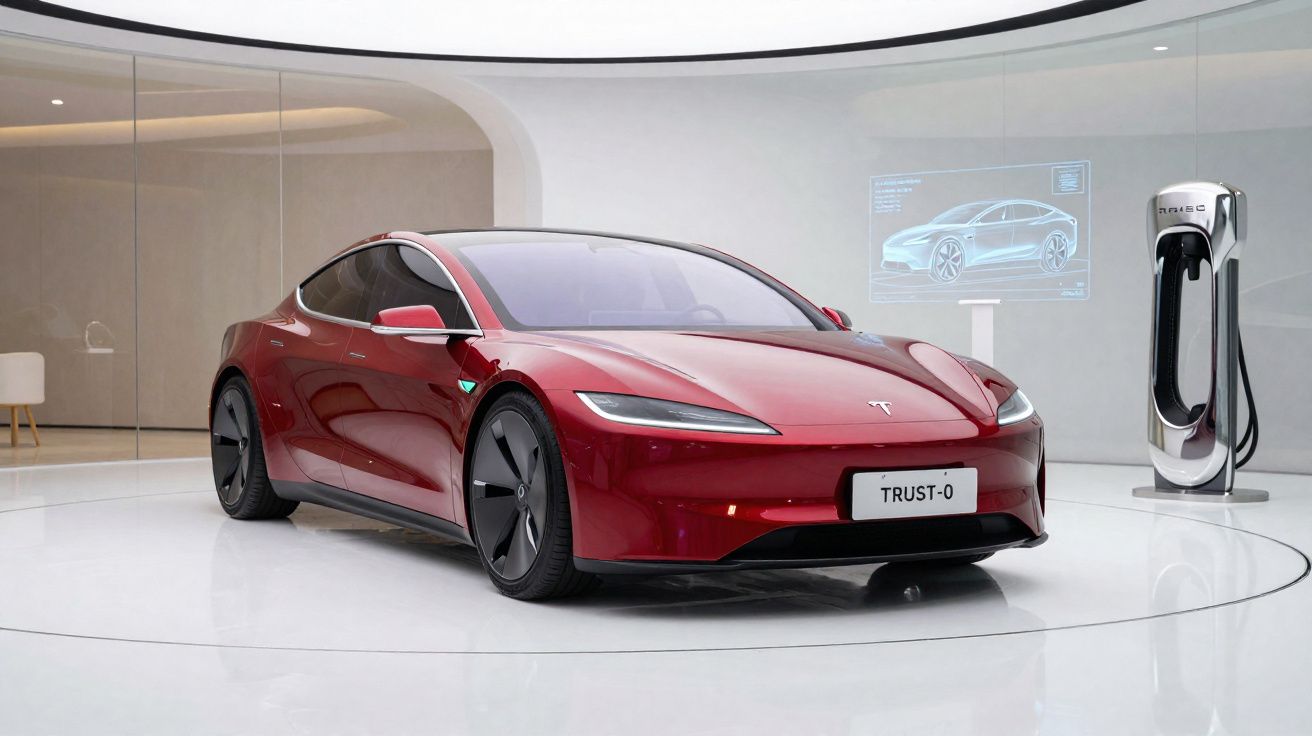
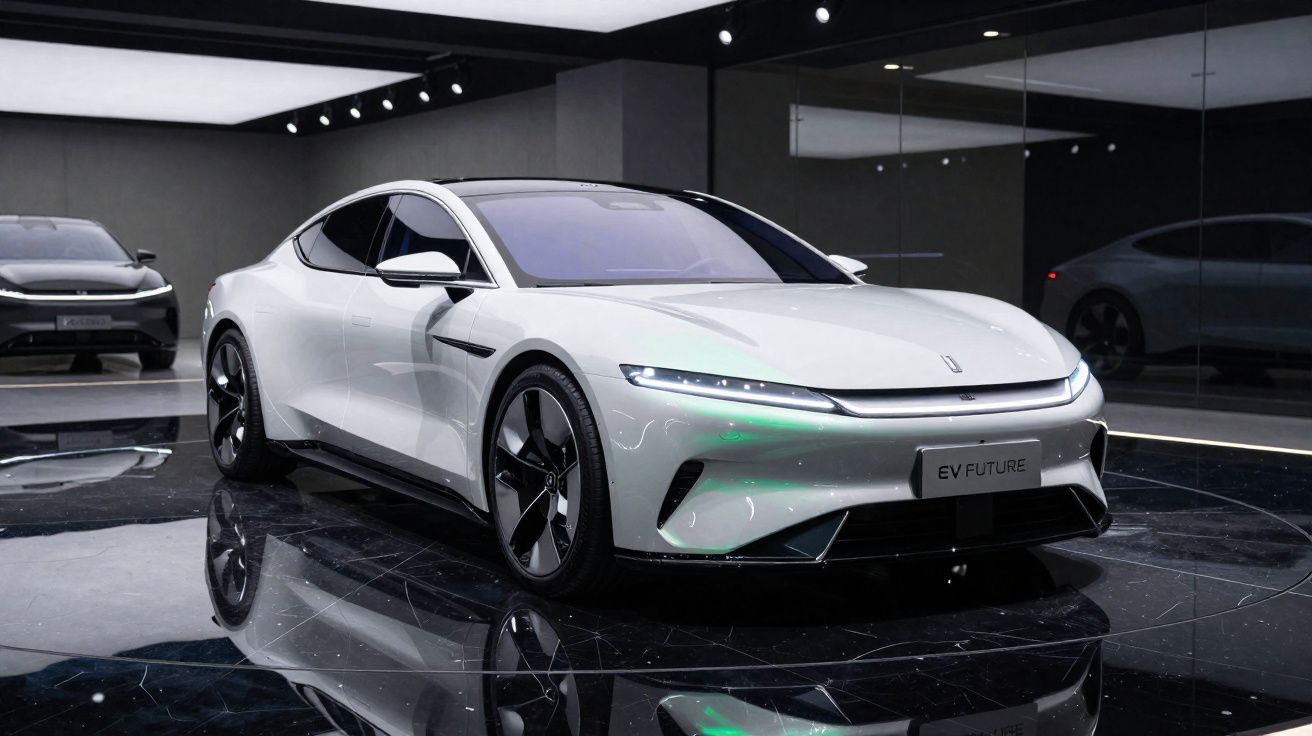
The showroom felt oddly hollow. Aside from a wall-sized display replaying the same polished Tesla promo on a loop, there wasn’t much life in the place. A young couple circled a Model Y, murmuring about software updates and resale value, while the sales adviser gestured towards a QR code rather than simply opening the door. No coffee on offer, no printed brochure to take away - just an app, and a grin that looked as though it was two firmware updates away from being replaced by a chatbot.
A few taps away on X, die-hard supporters were hailing it as “the future of car buying”. In the financial world, analysts had Tesla’s share chart open on a second screen, watching a very different story flicker in red and green.
That distance between the fan narrative and the market mood seems to widen every week.
Innovation on paper, whiplash in real life
Tesla’s most committed followers often insist they bought into a technology company rather than a traditional car manufacturer. Rapid iteration, half-finished experiments, bold bets on autonomy - that’s the excitement, the mythology, the near-cult momentum that’s kept Tesla glowing for more than a decade.
Yet once you step away from the memes and hero worship, a less flattering picture comes into focus: a business whose decisions can feel so unpredictable that even long-time believers are asking what, exactly, the plan is.
The vehicles still project the future. The way the company behaves around them can feel strangely improvised.
Consider the Cybertruck saga. It was unveiled in 2019 as a stainless-steel breakthrough - smashed window included - and it attracted hundreds of thousands of pre-orders of about £80 each, framed as a crowd-backed tech dream. Then came years of waiting. When the truck finally began reaching customers, volumes were limited, recalls appeared, quirks became talking points, and the real-world pricing landed hard for some early fans.
Then there are the violent price movements on the Model 3 and Model Y over the past two years. Buyers committed at one figure, only to see prices fall by several thousand pounds not long afterwards, followed by incentives and sudden “inventory discounts” that seemed to arrive overnight. For a purchase that sits firmly in “investment-sized” territory for most households, that yo-yo effect doesn’t feel like progress - it feels like being played.
You can only ask loyal customers to shrug and say “that’s innovation” so many times before it stops sounding convincing.
Financial markets are often quick to detect risk before anyone says it aloud. When strategy keeps shifting, features keep slipping, and “Full Self-Driving” remains perpetually almost-ready, investors begin to price in something costlier than factories, batteries, or robots. They price in doubt.
Trust is a quiet asset - one that never appears as a line item, yet props up everything from demand to regulatory goodwill. Burn it with missed deadlines, overcooked demos, and impulsive late-night CEO outbursts, and you’re not just bruising the next quarter. You’re asking customers, regulators, partners, and employees to accept far more uncertainty than they agreed to.
Eventually, what once looked like bold disruption starts to resemble a management issue.
Tesla trust and the shift from charismatic chaos to a confidence crisis
One of the clearest signs of eroding trust is the way people now talk about buying a Tesla. The early conversation was driven by desire: quick acceleration, clever tech, a cool-factor that felt like arriving early to the future. Increasingly, a different set of questions sneaks in: Should I hold off? Will the price drop again? Is this version already old news?
For a brand that trained people to order cars from their phones without seeing them in person, that hesitation matters. It changes the atmosphere in the showroom, the mood in owner communities, and the way friends and family weigh in on the decision.
A choice that used to feel like joining tomorrow can now feel like placing a wager against volatility.
Spend time in Tesla forums and the same themes recur. Owners who paid premium prices last year now watch “inventory clear-out” offers shave chunks off the cost of near-identical cars. Drivers who bought the Full Self-Driving package years ago are still waiting for the promised software leap that was marketed as close at hand.
There’s also the familiar delivery-day story: the enthusiast who travelled across several counties to collect a dream Model X, only to spot panel gaps and discover features that felt unfinished. They stayed loyal, sorted the snags, posted range figures, defended the brand. Then, a few months later, a neighbour picked up a newer build for less money - plus incentives the first buyer never received. The tone of the posts changes from evangelism to quiet bitterness. That emotional pivot is the real signal hiding behind glossy delivery headlines.
Markets don’t process this as isolated anecdotes; they read it as a pattern. Yes, the hard numbers matter: softer EV demand growth, stronger competition (including from China), and margins squeezed by repeated price cuts. But investors also weigh the softer, messier inputs: a CEO splitting attention across multiple companies, making off-the-cuff product promises on social media, and picking public fights with regulators and journalists.
Over time, the shape of the story becomes familiar: ambitious targets followed by walk-backs; dramatic reveals followed by delays; cost cutting that begins to look like corner cutting. The share price ends up reflecting more than interest rates or macro cycles - it reflects an expanding suspicion that leadership may no longer know exactly where it’s steering.
And no, nobody reads an annual report and comes away reassured by “vibes” alone.
A UK reality check: service, repairs, and the second-hand market (new)
In the UK, trust isn’t only about headline prices - it’s also about what happens after you take the keys. If service appointments feel hard to secure, parts take too long to arrive, or minor bodywork becomes a drawn-out process, the ownership experience can sour quickly. For many buyers, that day-to-day practicality matters as much as range or acceleration.
There’s a further knock-on effect: the used market. When new-car pricing and incentives shift sharply, it can distort residual values and complicate PCP decisions, trade-ins, and fleet calculations. A brand can be technologically impressive and still create anxiety if buyers can’t predict what their car will be worth in 12–24 months.
How a trust-rich company behaves differently
Companies that guard trust like oxygen tend to operate in a recognisable way. They still innovate - but they match big claims with clear roadmaps, steady updates, and a humility that feels unexpectedly reassuring. They temper timelines, obsess over the unglamorous details, and treat customers like partners rather than beta testers.
For Tesla, that would likely mean fewer hype-heavy feature announcements in live streams and more consistent, plainly communicated product cycles. It could also look like saying “we’re not ready” on autonomy instead of repeating “next year, definitely” year after year.
Trust grows when reality turns up slightly better than the expectation you set yesterday.
There’s an emotional trap here, especially for fans: mistaking affection for a brand with a lack of accountability. You can genuinely love the acceleration, the clean cabin, and the way over-the-air updates can make a Tuesday morning feel like Christmas. You can also acknowledge that the organisation you admire is drifting into chaos. Both truths can sit in the same garage.
Many people stay quiet because they don’t want to hand “ammo” to critics or short-sellers. The price of that silence is that honest feedback stops reaching the people who could actually fix what’s broken. When devoted owners feel manipulated - on pricing, on software promises, on resale value - the sting cuts deeper than any viral tweet.
Most of us recognise that moment: when loyalty is returned with a shrug instead of a hand.
“Trust is built on three things,” a former automotive executive once told me. “Consistency, transparency, and the sense that leadership is driving for the long term rather than chasing this week’s headlines. You can get away with volatility for a while if the dream is big enough. But you can’t outrun human patience forever.”
Consistency over spectacle
Stable pricing, clear model refresh cycles, and fewer surprise discounts reduce buyer anxiety and help restore faith in long-term value.Transparent timelines
Credible delivery dates, honest progress updates when delays happen, and fewer grand “coming soon” claims rebuild confidence with both markets and customers.Long-term signals
Keeping public communication focused on product quality, safety data, and service improvements - rather than personal drama - signals that the company, not a personality, is steering.
Charging advantage, expectations, and regulation (new)
Tesla still benefits from a meaningful real-world strength: the supercharger network. Even as more open-access rapid charging arrives, reliability and ease of use remain decisive for many UK drivers, particularly those without off-street parking.
At the same time, as advanced driver assistance and autonomy claims become more prominent, scrutiny tends to rise - from regulators, insurers, and the media. The clearer Tesla is about what Full Self-Driving can and cannot do at any given moment, the less likely it is to invite backlash that damages trust further.
The thin line between bold and reckless
Tesla remains in a rare position: a brand that can move markets with a single slide on an investor day, and shift culture with one eccentric design choice. The cars are still impressive. The supercharger network remains a genuine advantage. The mindshare is enormous.
And yet, a quiet fatigue is spreading - across both the fan base and the financial community. People are weary of being told that every concern is “FUD”, that every wobble is simply the cost of greatness, and that any criticism is disloyalty. That story worked when the upside felt infinite. It grates more when competitors are closing the gap and the product no longer feels light-years ahead.
The boundary between bold and reckless isn’t declared in a press release. It’s drawn slowly, in the lived experiences of drivers, shareholders, and employees - one small disappointment at a time.
| Key point | Detail | Value for the reader |
|---|---|---|
| - | Innovation without reliability looks like chaos, not genius | Helps you interpret Tesla’s moves beyond the hype cycle and judge risk more clearly |
| - | Pricing swings and delayed promises erode long-term trust | Provides context for timing a purchase or deciding whether to hold, sell, or avoid the stock |
| - | Trust can be rebuilt, but only with consistency and transparency | Offers a simple lens to track whether the company’s behaviour is genuinely improving |
FAQ
Question 1: Is Tesla still considered an innovative company by the market?
Yes. Markets still view Tesla as highly innovative, particularly in software and manufacturing. What’s shifting is the “discount” investors apply when innovation is paired with unpredictable execution and communication.Question 2: Why do some fans defend every decision while the stock drops?
Many early adopters are emotionally invested and strongly identify with the brand story and the CEO. That attachment can blur the line between cool-headed analysis and tribal loyalty, even when the share price indicates concern.Question 3: Are constant price cuts always a bad sign?
Not necessarily. They can reflect efficiency gains or an aggressive push for volume. But when cuts become frequent and hard to anticipate, they can damage residual values and hint at demand or strategy problems.Question 4: What would restore confidence for sceptical investors?
Clearer product roadmaps, fewer missed timelines, more attention on core automotive metrics (quality, margins, service), and less erratic public messaging from leadership would all help.Question 5: Should buyers wait before ordering a Tesla right now?
It depends on your tolerance for uncertainty. If unpredictable pricing and fast-evolving features would irritate you, waiting for greater stability is sensible. If you prioritise cutting-edge tech and can live with volatility, buying now may still feel worthwhile.

Comments
No comments yet. Be the first to comment!
Leave a Comment