
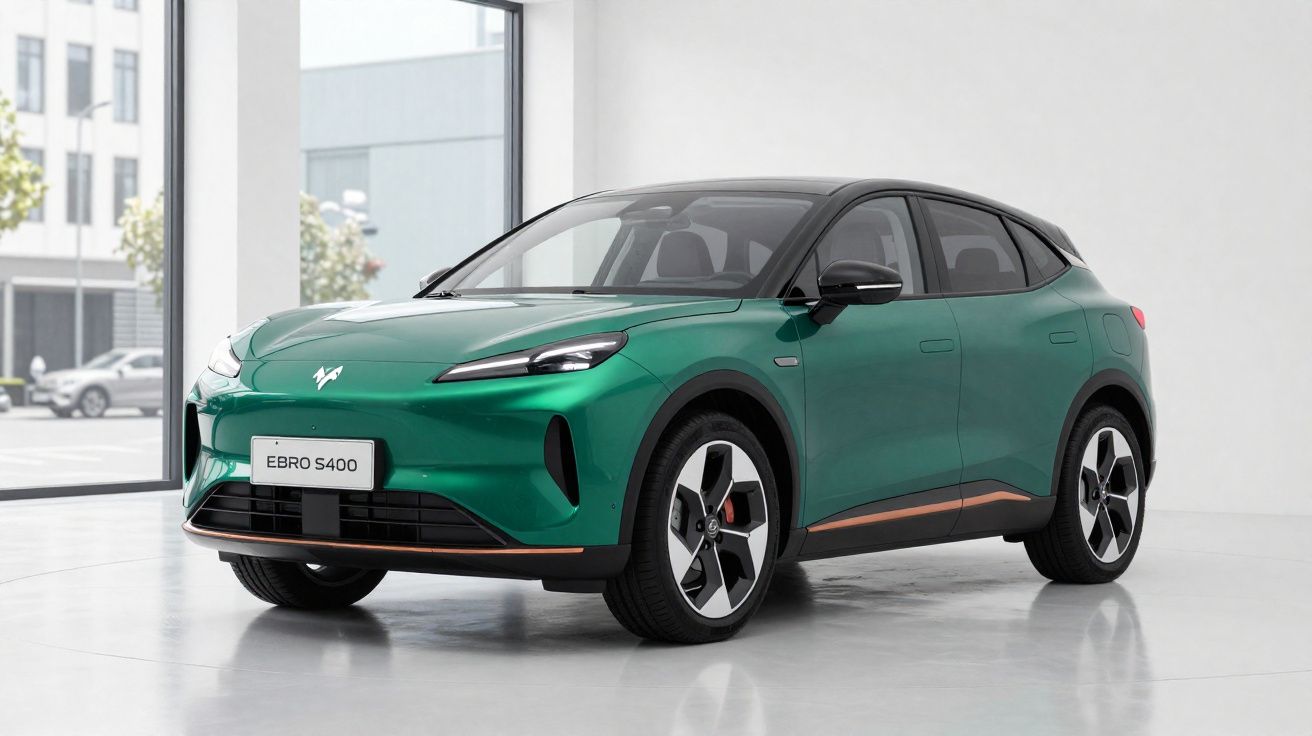
The marque is Ebro, the newcomer is the S400, and the figures suggest a deliberately awkward proposition for the class: strong hybrid power, an automatic gearbox, and a price point designed to put pressure on well-known rivals.
A fresh badge taking aim at the Toyota Yaris Cross and Renault Captur
In the UK, France and the US, Ebro is barely on anyone’s radar. That is precisely why the brand’s move into Europe’s most in-demand niche is so interesting: the compact hybrid crossover. This is the territory dominated by the Toyota Yaris Cross Hybrid, Renault Captur E‑Tech, and Kia Niro Hybrid-cars bought for everyday practicality, sensible running costs and the reassurance of electrified credentials.
Ebro’s point of difference is straightforward: a spec list that reads like it was written for tired urban motorists-ample output, a self-charging hybrid system, automatic transmission, and a headline finance deal in Spain that begins with “1” rather than “2”.
The Ebro S400 goes on sale in Spain from €19,990 on finance, pairing 211 hp with an automatic gearbox for less than many petrol superminis.
That entry figure will not translate directly to every country-taxation and fees vary widely across Europe-but the intent is unmistakable: Ebro wants to price below the mainstream while meeting (or exceeding) them on straight-line shove.
Ebro S400 powertrain: a punchy but pragmatic self-charging hybrid
Beneath the bonnet, the S400 uses a self-charging hybrid arrangement centred on a 1.5‑litre naturally aspirated petrol engine producing 95 hp. Alongside it sits a 204 hp electric motor, bringing combined output to 211 hp. Drive goes to the front wheels through a CVT automatic transmission.
For a compact SUV pitched at families and city users, those numbers are unusually strong. Ebro cites roughly 8.8 seconds for 0–100 km/h and a top speed of 150 km/h. It is not intended as a performance car, yet it should feel confident for motorway slip roads, overtakes and quick getaways at busy junctions.
The set-up is clearly tuned around refinement and day-to-day spend. Claimed consumption is 5.3 L/100 km, which places it right among today’s hybrid alternatives. In typical use, the electric motor should cover low-speed urban crawling, with the petrol engine taking a bigger role on faster suburban roads and long motorway runs.
From an access-and-regulation standpoint, Ebro says the S400 qualifies for a Crit’Air 1 sticker in France and receives “ECO” status in Spain. These classifications can be significant in cities operating low-emission zones, where older diesels-and in some cases higher-emitting petrol models-face restrictions.
With Crit’Air 1 classification, the S400 should remain eligible for entry to many existing and planned low-emission zones across major European cities.
One practical point worth adding: for many buyers, the appeal of hybrids is not only fuel economy but also the calmer driving experience. A CVT automatic gearbox paired with electric assistance can make stop-start commuting feel far less tiring than a conventional petrol model.
Pricing designed to unsettle established competitors
In Spain, Ebro lists the S400 at €19,990 with financing and around €23,457 cash, including taxes. Prices for France and other markets have not been confirmed, but even once local taxes and type-approval costs are accounted for, the S400 appears positioned well below familiar nameplates.
| Model | Power | Base price (approx.) | Label |
|---|---|---|---|
| Ebro S400 | 211 hp | €23,500 | Crit’Air 1 |
| Toyota Yaris Cross Hybrid | 116 hp | €27,900 | Crit’Air 1 |
| Renault Captur E‑Tech 145 | 145 hp | €29,000 | Crit’Air 1 |
| Kia Niro Hybrid | 141 hp | €31,490 | Crit’Air 1 |
That creates an eye-catching power-per-pound equation. In broad terms, you are looking at the money usually associated with a small petrol hatchback, yet getting a 211 hp hybrid SUV with a CVT automatic transmission. For households managing monthly budgets while steering clear of diesel, that alone will prompt a second look.
The obvious trade-off is trust. Ebro will need to demonstrate long-term support: warranty administration, parts supply, and a service network capable of dealing with faults quickly. Early buyers are often more tolerant of a new brand; mainstream family customers typically wait until reliability, recalls and customer care have been tested in the real world.
A further consideration-especially in markets such as the UK-is insurance grouping and repairability. Even keen pricing can be undermined if premiums are high or if accident repairs take longer due to limited parts availability.
Ebro S400 equipment: modern features without the “budget” feel
Although Ebro pitches the S400 as strong value, it is clearly trying to avoid the bargain-basement image. In “Premium” trim, the SUV is advertised with equipment many drivers now regard as must-have:
- 17‑inch alloy wheels
- LED headlights and rear lights
- Digital instrument cluster ahead of the driver
- Dual‑zone automatic climate control
- A broad set of driver assistance systems, including automatic emergency braking, lane‑keeping assist, traffic sign recognition, and more
Inside, the layout follows the current template: a digital driver display paired with a centre touchscreen. Rear accommodation is described as typical for the segment-usually meaning two adults sit comfortably, while a third passenger is best kept to shorter trips.
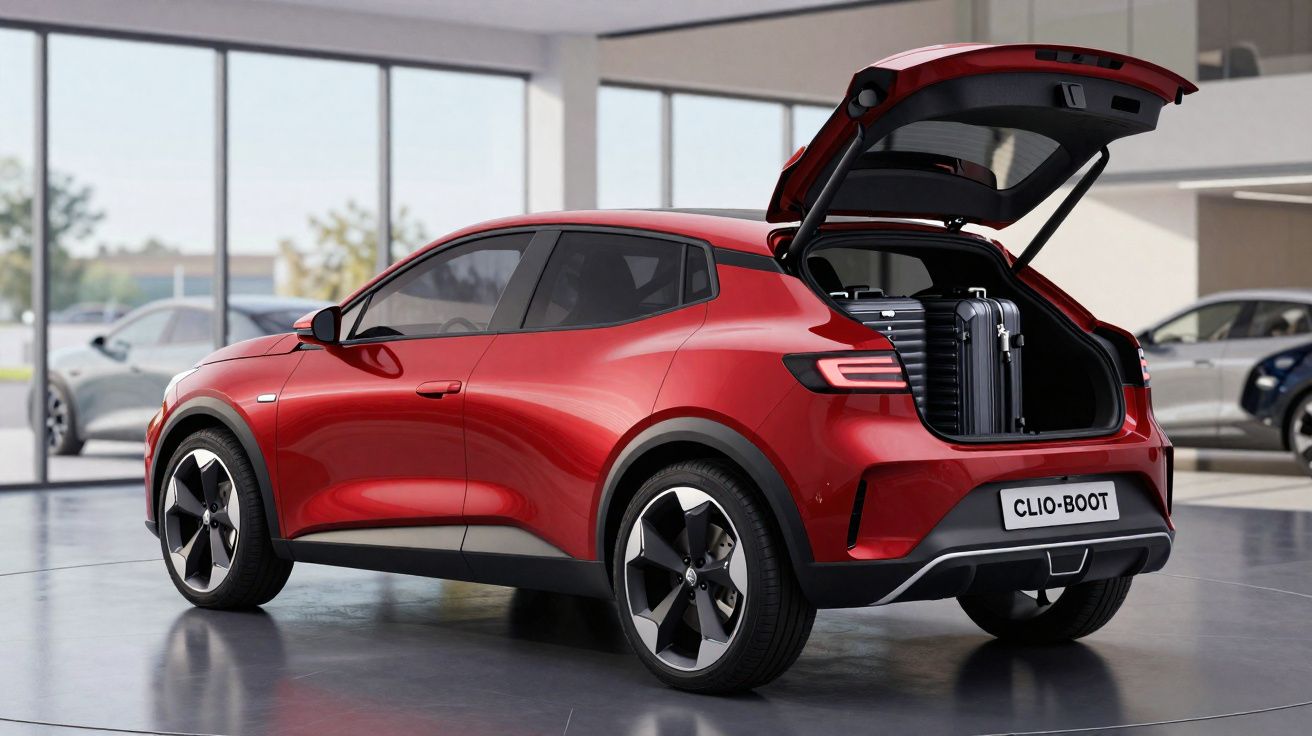
The boot is arranged for everyday flexibility, with a 60/40 split rear bench so you can mix passengers and luggage. Ebro is not claiming class-leading capacity, but for city-focused family life, a practical load opening and a usable, flat space often matter more than chasing maximum litres on a brochure.
Why the S400 matters for European motorists right now
The timing is not accidental. Electrified cars have become noticeably pricier: battery costs, tougher safety requirements and constant investment in software and driver aids have pushed list prices upwards. Plenty of households now feel squeezed out of full EVs-and, increasingly, out of big-brand hybrids too.
Ebro’s bet is that there is a sizeable audience that wants hybrid-style running costs and access to low-emission areas, but does not want the complexity of a plug-in routine or the expense of a pure battery electric car.
The S400 is aimed at drivers who want hybrid efficiency and urban access advantages, without paying premium-brand prices or fitting home charging.
There is also an industrial and political dimension. The vehicle is produced in Europe at a time when EU bodies are paying closer attention to very low-cost imports from Asia and debating additional tariffs. A Spain-built SUV sold aggressively avoids some of the trade uncertainty that can hang over non‑EU supply chains.
Availability, and what importing could look like
At present, the S400 is officially sold in Spain only. Ebro does not yet have an established dealer network in France, and wider European rollout appears to be in its early stages. For interested buyers outside Spain, that leaves two realistic paths: wait for an official market launch, or investigate personal import (or a broker-assisted purchase).
How a buyer in France might import an S400
Bringing a vehicle over from another EU country is entirely doable, but it is admin-heavy. A French resident purchasing an S400 in Spain would typically need:
- A European Certificate of Conformity (CoC) issued by Ebro or an authorised representative
- A visit to the regional vehicle approval office (DREAL) if the CoC is incomplete or additional approval is required
- Evidence that VAT is correctly handled (paid in the appropriate country depending on whether the vehicle is new or used)
- A French registration certificate issued after obtaining a tax clearance certificate
Import brokers specialising in Iberian vehicles are already likely to take interest, because the value proposition is the entire story here. If demand builds, the process could become close to “hands-off” for customers, with transport, paperwork and registration managed for a fee.
What “self-charging hybrid” actually means day to day
“Self-charging hybrid” can sound like a trick phrase, but the reality is simple. As with other non plug-in hybrids, the S400’s battery is relatively small and is replenished by the petrol engine and by energy recuperated during braking and coasting.
In practical terms, there is no charging cable and no need to plan around sockets or public chargers. On short urban journeys, the car can often pull away and roll along on electric power for brief stretches, lowering noise and fuel use. At motorway speeds, the petrol engine will do more of the heavy lifting, with the electric motor pitching in under acceleration and on inclines.
Drivers who spend most of their time in town traffic typically see the biggest savings versus a conventional petrol car. If most miles are motorway commuting, the hybrid advantage is still there, but usually smaller-so the decision becomes more about low-emission access, refinement and the ease of an automatic gearbox.
Who the S400 suits-and who may want to wait
The Ebro S400 looks particularly well matched to:
- City-based families wanting a compact SUV with space for two adults, two children and weekend bags
- Commuters who need to enter low-emission zones but cannot conveniently run a plug-in hybrid or full EV
- Value-driven buyers who want strong equipment and power and are open to trying a new marque
Equally, some customers should approach with caution-especially anyone fixated on proven residual values or anyone living a long way from any future Ebro servicing point. Warranty work is far more stressful when the nearest authorised workshop is hours away, or when parts supply depends on cross-border logistics.
It also pays to compare total cost of ownership, not just the list price: servicing, tyres, insurance, expected depreciation and the potential risk of downtime. For high-mileage users and company-car drivers, local support should be high on the checklist.
For everyone else, a 211 hp hybrid SUV, built in Europe and offered from under €20,000 on finance in its home market, points to a wider shift: established brands may have to justify their pricing more carefully, and the compact hybrid crossover segment is about to feel a lot less settled.


Comments
No comments yet. Be the first to comment!
Leave a Comment