
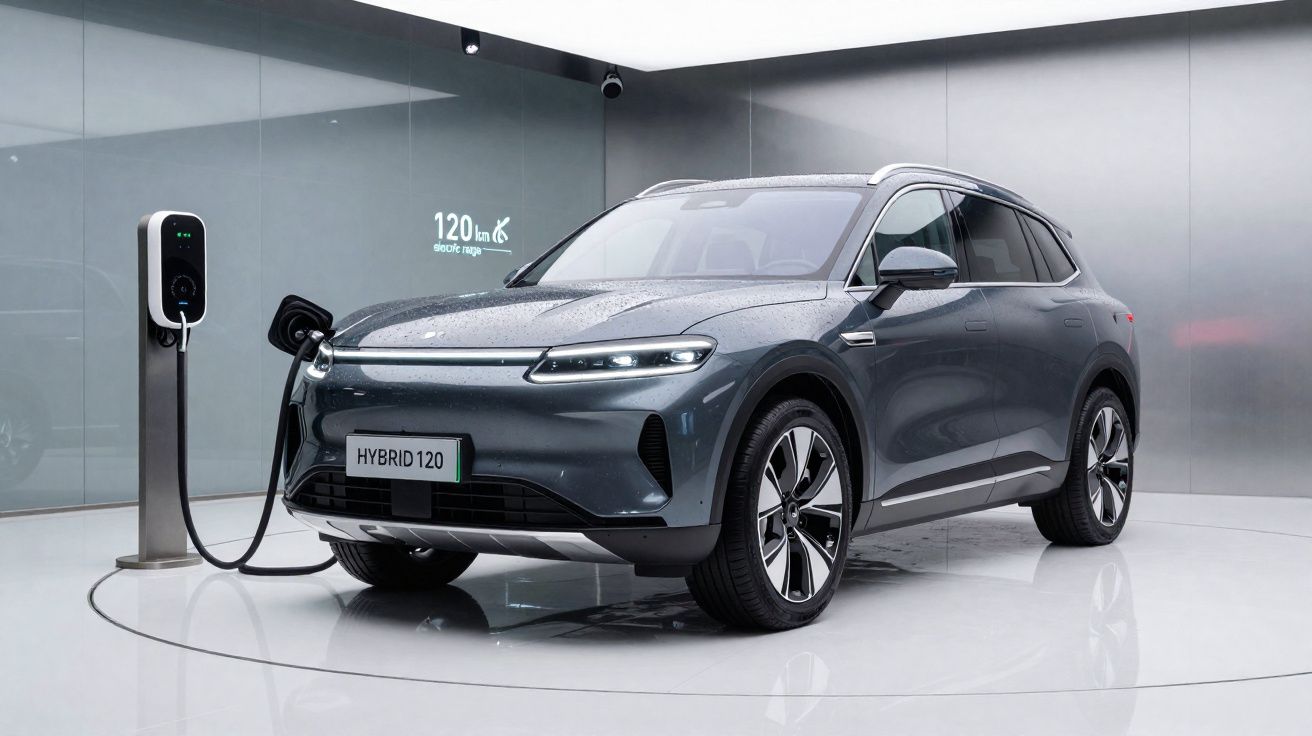
On a dull Tuesday morning on the outskirts of Stuttgart, an SUV eases out of a driveway with barely a sound. There’s no growl from an engine and no exhaust cloud hanging in the cold. A child in the back is lost in TikTok, the dog has curled up for a nap, and the sat-nav reads 42 kilometres to the office. The instrument display shows 98% battery - and the little diesel icon remains stubbornly greyed out.
The familiar congestion arrives right on cue. The car rolls forward, brakes, creeps again. Still no diesel. The driver nips to the supermarket, squeezes in the gym, and heads home. By early evening, the day’s list is ticked off: 117 kilometres covered, yet the fuel gauge hasn’t budged.
It’s only while planning a weekend run to Munich that the thought returns: there’s a diesel engine under the bonnet at all.
Germany’s quiet rebellion against the all-or-nothing EV
Walk through a German showroom today and the industry’s identity crisis is on full display. On one side sit ranks of fully electric crossovers: oversized touchscreens, polished brochures, and promises of a clean break from combustion. Opposite them are the imposing diesel SUVs, still favoured by people who spend serious time on the Autobahn.
In the middle is a third camp that’s growing fast: plug‑in hybrid SUVs - but with a crucial update. The latest generation, particularly from German manufacturers, can now cover up to 120 km on electric power alone before using a single drop of diesel. That extra distance quietly changes how the whole concept works.
Not long ago, plug‑in hybrids had a reputation problem. The batteries were small, the real-world electric range often landed around 30–40 km, and the engine would cut in with the slightest provocation. Company-car drivers liked the tax advantages, but many rarely bothered to plug in. To the public, they began to look like green credentials on paper rather than genuine low-emissions driving.
The new wave is different. Battery packs have grown substantially, control software has become far smarter, and the diesel engine is increasingly treated as a range extender rather than the main event. On certain German test cycles - particularly routes biased towards town and suburban driving - these SUVs are posting 100–120 km of electric range. The result is a large family car that can handle most weekly travel like an EV, with a backup plan sitting quietly in reserve.
That matters in a country that prizes engineering, distrusts sudden upheaval, and still expects cars to cope with long-distance realities: trailers, Alpine holidays, and unglamorous practicality. A diesel-hybrid SUV that behaves like an EV from Monday to Friday, then tows a caravan 800 kilometres at the weekend without mapping charging stops hits a distinctly German sweet spot.
It also softens one of the biggest psychological barriers to going electric. Instead of an ultimatum - “switch to a full EV or be left behind” - long-range plug‑in diesels offer a more gradual bargain: drive electric whenever it makes sense, and burn fuel only when you genuinely need to.
How a 120 km diesel-hybrid plug‑in hybrid SUV fits real life
Imagine a household just outside Cologne. One partner commutes into the centre: 35 km each way. The other works from home. Two school runs sit 4 km away, football training is midweek, and grandparents live 25 km out of town. It’s standard suburban Europe: nothing extreme, just lots of small journeys stacked together.
With a 120 km electric range, that daily pattern turns almost entirely electric. The commute stays in EV mode even with detours. School drop-offs are electric. The quick evening shop is electric. The diesel only makes itself known when a late-night airport dash appears out of nowhere - or when someone forgets to plug in. Most of the time, the combustion hardware is simply extra weight being carried around… yet it’s weight that feels oddly reassuring.
That reassurance is backed up by the numbers. A German energy-agency survey recently put average daily driving distances at roughly 30–50 km. In other words, a 120 km electric “envelope” doesn’t just cover the main commute - it also absorbs the unpredictable extra trips that sneak into a day. This is exactly where older plug‑in hybrids fell short: a claimed 50 km could shrink to 30 in winter, 25 with a heavy right foot, and the engine would soon be doing the bulk of the work again.
Doubling the range creates breathing room. Miss one night of charging? You’re often still fine the next day in EV mode. Get an unexpected errand across town? You may still avoid fuel entirely. Those margins are what make technology fade into the background instead of demanding a new lifestyle.
There’s also a mental-health angle. A full EV asks you to trust the charging network, trust your planning, and trust that your day won’t suddenly change shape. A diesel-hybrid with a big battery tells you: default to electricity, but don’t fear the curveball. Your holiday drive or urgent cross-country trip won’t turn into a three-hour hunt for a working rapid charger. That reduction in stress can matter as much as the savings.
For plenty of drivers, the real hurdle isn’t a home wallbox (charging point) or even the purchase price - it’s the constant mental arithmetic of range. A plug‑in diesel SUV that mostly behaves like an electric car, yet can still cross Germany in one stint without spreadsheets and contingency plans, starts to look less like an awkward compromise and more like a genuinely practical transition.
The tricky art of using a diesel-hybrid well
Here’s the part glossed over in many sales pitches: these vehicles only deliver on their promise if you treat them as EVs with a safety net - not as diesels with a token battery. The approach is straightforward in theory:
- Charge as often as you realistically can (ideally overnight).
- Use EV-only mode for urban driving.
- Save hybrid/diesel operation for motorways, long distances, or a low battery.
When drivers actually stick to that strategy on German test routes, fuel consumption can look almost absurd: 1–2 litres per 100 km over a mixed week. In the real world, the figure will vary with weather, speed, terrain and load - but the principle holds. The more consistently you plug in, the more the diesel turns into quiet insurance rather than a daily habit.
The most common failure mode is painfully human. People buy a plug‑in hybrid, swear they’ll charge constantly, and then everyday life gets in the way: late meetings, tired evenings, children to wrangle, bad weather. The cable stays in the boot for days. A month later, the “eco” SUV is effectively a heavy diesel hauling around an unused battery pack.
Nobody manages perfection. The sensible goal is “most days” - and then shaping small routines that make that easier. Put the cable somewhere you can’t miss it. Set reminders on your phone. Accept that some days the diesel will run, and recognise that it doesn’t wipe out the electric kilometres you’ve already banked.
German testers keep returning to the same (almost boring) message: if you take the battery side seriously, the numbers improve fast. As one engineer put it to me at a test centre near Munich:
“These cars make sense when you drive like an EV owner - but with the range anxiety removed.”
A few simple habits can make that mindset stick:
- Plug in whenever the vehicle will be parked for more than an hour, not only overnight.
- Use the sat-nav’s energy-optimised routing so the system knows when to conserve battery.
- Keep fast motorway stretches for diesel mode and reserve electric power for towns and traffic queues.
- Track monthly fuel spending rather than fixating on moment-by-moment consumption screens.
- Choose one “all-electric day” per week to learn what the car can genuinely manage.
None of this is heroic. It’s a set of minor behaviours that gradually turns a complicated drivetrain into a calm, low-effort way to drive.
Two realities buyers often overlook (but shouldn’t)
Battery performance is seasonal. Cold weather can cut electric range noticeably, especially on short trips where the cabin heater is working hard. Pre-heating the cabin while plugged in and using eco heating modes can preserve more of that headline 80–120 km everyday band.
It’s also worth thinking about where you drive most. In and around German cities with tighter air-quality rules and low-emissions zones, running in EV mode more often can reduce local pollution and make urban driving feel quieter and smoother. The more your weekly mileage is concentrated in built-up areas, the more the plug-in part of plug‑in hybrid SUVs becomes the main event rather than an occasional feature.
Could this be the real bridge to our electric future?
A larger question hangs over every diesel-hybrid SUV gliding through a 30 km/h zone on silent electric power: is this merely a clever stopgap, or is it the missing link that helps sceptical drivers move towards full electric without panic?
Some climate campaigners view plug‑in hybrids as a distraction - additional layers of technology that postpone the end of combustion. Yet spend time at a motorway service area on a Friday evening and you’ll see how people actually travel: trailers, roof boxes, mountain bikes, children asleep in the back, dogs pressed to the windows. For many of those lives, the jump from pure diesel to pure EV can still feel just a bit too far.
A 120 km diesel-hybrid doesn’t claim to be flawless. It still burns fuel, still has a tailpipe, and still sits within global oil economics. But it can cut urban emissions immediately, reduce fuel bills, and gently coach drivers into “thinking electric”: plugging in, noticing how short most trips really are, and learning to manage energy without drama.
Perhaps the real takeaway isn’t that Germany has found a magic answer to the EV dilemma. It may be that a country devoted to Autobahns and engineering is quietly trialling a softer route into the post-petrol era - one where change arrives less like an order and more like an invitation, hidden inside an SUV that barely drinks during the week and still devours motorway miles on Sunday.
| Key point | Detail | Value for the reader |
|---|---|---|
| Extended electric range | Up to 120 km of real-world EV driving before the diesel starts | Most everyday trips can be completed fuel-free without a lifestyle overhaul |
| Dual-usage comfort | Quiet urban driving, with long-distance diesel backup for holidays and work travel | Less range anxiety and fewer compromises than a full EV for certain drivers |
| Smart habits matter | Regular charging and EV-first use turn a complex system into major savings | Clear, practical ways to cut costs and emissions without feeling “punished” |
FAQ
Do these diesel-hybrid SUVs really reach 120 km on electricity?
In gentle urban and suburban use, German tests show some new plug‑in SUVs can get close to 100–120 km in EV mode. In cold conditions, at high speeds, or with heavy loads, expect less. A sensible real-world expectation is often 80–100 km day to day.Are they better for the environment than pure electric cars?
On short daily trips, emissions can be very low if you charge regularly. Across a full lifetime, a full EV on a cleaner electricity mix usually comes out ahead. Even so, compared with a conventional diesel SUV, these plug‑ins can reduce fuel consumption sharply, particularly in urban areas.What kind of driver benefits most from a 120 km diesel-hybrid?
Drivers with access to charging at home or work, routine commutes under 60 km each way, and occasional long motorway journeys. If nearly all your driving is short and you rarely travel far, a full EV will often suit you better.Is maintenance more complicated with a diesel-hybrid?
There are more components: diesel engine, battery, electric motor and complex software. Servicing can resemble that of a normal car, and oil-change intervals may be longer because the engine runs less. Over many years, however, battery and power electronics can introduce additional costs.Will these cars still make sense as charging networks expand?
As rapid charging spreads and battery ranges increase, many drivers will eventually skip hybrids and move straight to fully electric models. Until that tipping point reaches every region - and every budget - long-range plug‑in diesels may remain a realistic stepping stone rather than an idealistic leap.


Comments
No comments yet. Be the first to comment!
Leave a Comment