
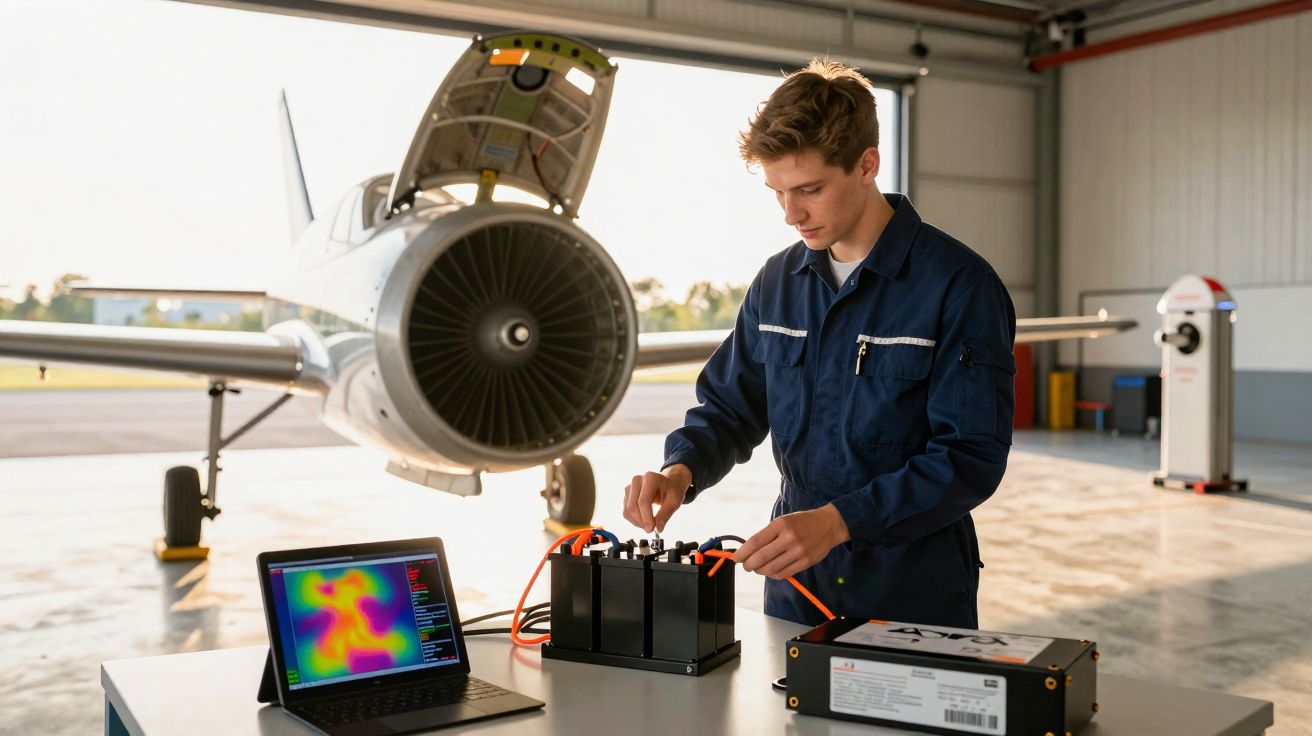
British engineers are steadily changing the way jet engines operate, borrowing lessons from hybrid cars and placing a sizeable wager on cleaner long‑haul flying.
Across aviation laboratories in the United Kingdom, a fresh wave of aircraft propulsion concepts is being developed. Rather than depending entirely on kerosene‑burning turbofans, these architectures blend conventional gas turbine power with electric systems inspired by the automotive hybrid handbook. For London, the attraction is clear: protect the nation’s aerospace edge, reduce emissions, and help write the next chapter of commercial aviation.
Why the UK is pushing hard on hybrid aircraft engines
The United Kingdom is home to major engine manufacturers, specialist suppliers and a tightly connected university research base in aerospace. Decision‑makers view hybrid propulsion as a logical progression for this ecosystem-and as a way to safeguard export markets in the face of assertive US and European rivals.
There is also a climate-policy driver. Aviation represents an increasing share of greenhouse gas emissions, particularly as other parts of the economy continue to decarbonise. Hybrid systems are promoted as a two‑part advantage: they can lower fuel burn and they can run alongside newer fuels such as sustainable aviation fuel (SAF) and, later, potentially hydrogen‑derived fuels.
The UK is betting that hybrid aircraft engines can bridge the gap between today’s kerosene jets and tomorrow’s fully climate-neutral aviation.
Public funding, tax relief for R&D and collaborative industry programmes are speeding up the shift. While much remains commercially sensitive, industry observers see a consistent direction in research calls: stronger emphasis on electric machines, high‑voltage distribution, power electronics and advanced thermal management.
Hybrid engines take off after proving themselves on the road
The principle of a hybrid aircraft engine is immediately recognisable to anyone who has driven a Toyota Prius or a similar vehicle: pair a combustion engine with an electric motor, coordinate them with intelligent power management, and deploy each source where it is most effective. Aviation, however, raises the stakes dramatically-and the engineering difficulty rises with it.
In most hybrid cars, the electric motor supports acceleration and recovers energy during braking. In a hybrid aircraft concept, generators, batteries and electric motors would assist-or in certain phases partly substitute-the thrust normally produced by conventional jet engines.
Hybrid aircraft powertrains aim to keep the reliability of gas turbines while introducing electric assistance to cut fuel burn and emissions.
UK research programmes are exploring multiple arrangements, including:
- Series hybrid, where a gas turbine turns a generator and electric motors drive the fans.
- Parallel hybrid, where electric motors boost a conventional fan that is primarily turbine-driven.
- Turbo-electric systems, where electrical power is distributed to several smaller fans positioned across the airframe.
The objective is not to roll out a fully electric airliner next year. Instead, engineers are aiming for step-by-step improvements: lower fuel use during take-off and climb, quieter operations in the vicinity of airports, and improved overall efficiency on medium-distance routes.
From car technology to jet engines: what transfers, what does not
Hybrid cars have made the combination of combustion and electric drive feel normal. Several enabling technologies carry over to aviation relatively well-although they must be scaled and hardened substantially.
| Technology area | Automotive role | Aviation adaptation |
|---|---|---|
| Power electronics | Convert and control power between battery and motor | Expanded to operate at megawatt levels under demanding conditions |
| Battery management | Optimise charging, health and safety | Tighter safety margins and monitoring, with aviation-grade redundancy |
| Electric motors | Provide traction and regenerative braking | Drive fans or propellers, prioritising power density and reliability |
| Energy optimisation software | Switch between electric and combustion power | Orchestrate complex flight phases, including climb, cruise and diversion |
Other elements are far less straightforward to translate. Aircraft require vastly more power than cars, sustained for much longer durations, and mass matters much more. A small weight increase that a road vehicle can tolerate may severely damage aircraft economics.
The tough engineering problems still on the runway
Hybrid aviation looks compelling in theory, but several persistent barriers remain.
Battery weight and safety
Today’s batteries store only a small fraction of the energy per kilogram that jet fuel provides. That makes fully electric long‑haul operations unrealistic in the near term. Hybrid architectures work around this by using batteries sparingly-targeting the parts of the flight where electric input delivers the greatest return.
Safety is central to every decision. High‑energy batteries can overheat or ignite if they are damaged or incorrectly controlled. Aviation rules therefore demand robust containment, automated monitoring and appropriate ventilation, all of which add weight and complexity.
Heat, voltage and reliability
Hybrid jets would need high‑voltage electrical networks operating at megawatt scale for hours. Cooling these systems at altitude-where air is thin and temperatures can be harsh-pushes thermal management to the edge. Teams are assessing new materials, compact heat exchangers and better packaging inside engine nacelles to control temperatures.
Reliability is equally non‑negotiable. Each additional component introduces new potential failure modes. Regulators will require evidence that a hybrid system is at least as safe as a conventional engine, which drives the need for redundant architectures, fail-safe controls and carefully designed fault tolerance.
Any hybrid engine that reaches commercial service must meet the same rigorous reliability standards that built trust in today’s jetliners.
New considerations: airport energy and airline maintenance
Hybrid aircraft operations would also reshape what happens beyond the aircraft itself. If electric taxiing or ground-based charging becomes routine, airports may need upgraded electrical capacity, resilient power quality, and new operational procedures to manage turnarounds without delaying departures.
Airlines would face a workforce and maintenance transition as well. High‑voltage safety training, different diagnostic tooling, and updated spares strategies for power electronics and electric motors would become part of day-to-day engineering-alongside established gas turbine maintenance practices.
What hybrid aircraft operations could look like
If these systems mature, many passengers may notice little at first. The most apparent differences are likely to be reduced noise and lower fuel consumption, rather than changes to cabin layout or fares.
A plausible operating pattern for a hybrid narrow‑body aircraft could be:
- Taxi and pushback: Electric power manages slow ground movement, reducing fuel burn and cutting local emissions.
- Take-off: Electric motors provide a short thrust boost, enabling smaller gas turbines or operation from shorter runways.
- Climb: The aircraft transitions progressively towards mostly turbine power to conserve battery energy.
- Cruise: Fuel provides the bulk of propulsion, with electric systems used to fine-tune efficiency or serve as a backup capability.
- Descent and landing: Electric assistance helps reduce noise over populated areas and supports regenerative systems that marginally recharge batteries.
For airlines, the headline benefit would be smaller fuel bills and fewer emissions per seat. For airports close to urban centres, quieter departures and arrivals could help ease noise constraints and support more flexible scheduling.
Risks, trade-offs and competing technologies
Hybrid engines compete with other routes to decarbonisation, including drop-in sustainable aviation fuels (SAF) for existing engines, hydrogen propulsion, and eventually fully electric regional aircraft.
The UK approach broadly treats hybrid systems as a bridge: they retain proven gas turbine foundations while nudging aircraft towards a more electric future. That bridging role brings trade-offs.
On the risk side, carriers could invest heavily in an interim technology that becomes less attractive if batteries or hydrogen propulsion take a major leap forward. Certification timelines could also extend, potentially tying up capital in demonstrators that never reach commercial service.
On the upside, hybrid programmes force the supply chain to master high‑voltage hardware, advanced control systems and new maintenance methods. Those capabilities remain valuable across multiple future aircraft concepts, even if a particular hybrid layout evolves or is replaced.
Key terms behind the hybrid aviation push
A handful of technical concepts are likely to shape the public discussion as hybrid aircraft move from laboratory projects to operational reality:
- Power density: The amount of power a motor or battery can deliver per kilogram; higher power density generally means lighter systems.
- Specific fuel consumption: A measure of how efficiently an engine converts fuel into thrust; hybridisation is intended to reduce this value.
- Sustainable aviation fuel (SAF): Liquid fuel made from biomass, waste or synthetic processes; combined with a hybrid engine, SAF can significantly reduce lifecycle emissions.
- Distributed propulsion: Delivering thrust via several smaller fans or propellers powered electrically, rather than relying on a small number of large engines.
If UK efforts produce practical hybrid engines, they are most likely to appear first on domestic services and regional European routes. Shorter sectors can work with smaller batteries and a more manageable certification pathway, while still offering airlines a credible “greener flight” proposition.
Long‑haul aircraft would probably follow later, potentially using hybrids more as an electrical backbone than as a primary source of thrust. In that scenario, the most lasting impact may not be the first generation of hybrid jets itself, but the electrical architecture-and the engineering mindset-that hybridisation brings into mainstream aviation.

Comments
No comments yet. Be the first to comment!
Leave a Comment