
Across Britain’s hard-water regions, one humble cupboard staple is steadily becoming the go-to solution.
With household budgets under pressure and greener habits taking hold, many people are rethinking how they clean. Instead of heavily perfumed sprays and pricey refill systems, they are opting for food-grade acids that lift chalky deposits effectively and simply.
Why hard water matters
The hardest water in Britain forms a broad band across the South and East. With each boil or splash, calcium carbonate is left behind. Over time, that residue becomes limescale: a stubborn crust on heating elements, shower heads, taps and glass. It takes the shine off chrome, restricts water flow, and can reduce the lifespan of appliances. Even a light coating can push up energy use, because heat moves through scale far less efficiently than it does through metal.
Limescale is calcium carbonate. Mild acids convert it into soluble salts and carbon dioxide, which rinse away easily.
That is why so many households now reach for white vinegar. It is low-cost, easy to find, and strong enough to tackle everyday build-up. It also breaks down quickly after use. For routine descaling, it often performs just as well as specialist products-without the extra expense.
How the vinegar method works
The chemistry in brief
White vinegar is a solution of acetic acid, usually around 5–8%. When it meets calcium carbonate, a reaction produces calcium acetate, water and carbon dioxide. The tiny bubbles you sometimes see are the gas escaping, which is a good sign the process is happening. Warm liquid speeds things up, but there is no need to boil it-and heating too far can make the smell more noticeable.
Step-by-step for common appliances
- Kettle: Pour in enough of a 1:1 mix of white vinegar and water to cover the element. Warm it up, stopping before it boils, then leave for 30–60 minutes. Rinse twice and boil a full kettle of fresh water once before using again.
- Coffee machine: Run about half the tank through using the same 1:1 solution. Pause for 15 minutes mid-cycle, then complete the run. Flush through with two full tanks of plain water to rinse.
- Shower head: Remove it and soak in a warm 1:1 solution for 1–2 hours. Use a soft toothbrush on the jets, rinse thoroughly, then refit.
- Taps and aerators: Soak a cloth in vinegar, wrap it around the spout and leave for 30 minutes. For aerators, unscrew them, soak, rinse, then reassemble.
- Shower screens and tiles: Spray on a 1:1 mix, leave for 10 minutes, then wipe with a non-scratch pad. Using a squeegee after each shower helps slow new deposits.
Do not mix vinegar with bleach or products that contain chlorine. The reaction can release dangerous gases.
When vinegar is not ideal
Surfaces to avoid
Acid can damage natural stone, including marble, limestone and travertine, by etching the surface. It may also dull certain cement-based grouts and can mark some aluminium finishes. If you are uncertain, try a small test patch out of sight first. For these areas, a pH-neutral cleaner is safer, and drying the surface after use helps reduce spotting.
Heavy build-up or sensitive noses
Older, thicker scale may need either a longer soak or a stronger acid. Citric acid powder, mixed to a 5–10% solution in warm water, often works more quickly and has a gentler smell. For very stubborn deposits-particularly inside boilers where you cannot reach-commercial descaler products can be the better choice. With coffee machines and steam irons especially, follow the manufacturer’s manual.
| Option | Typical strength | Odour | Speed | Surface risk | Cost |
|---|---|---|---|---|---|
| White vinegar | 5–8% acetic acid | Noticeable | Moderate | High on natural stone | Low |
| Citric acid solution | 5–10% citric acid | Mild | Fast | Moderate on stone | Low to moderate |
| Commercial descaler | Varies (often stronger acids) | Low to mild | Fast | Check label | Moderate to high |
Wider benefits for home and planet
Using cupboard acids instead of specialist cleaners can cut down plastic waste from single-purpose bottles, pods and sachets. It also reduces the amount of added perfume and preservatives going down the drain. For households managing asthma or sensitive skin, fewer ingredients can mean fewer surprises. Both vinegar and citric acid biodegrade readily when diluted with water.
Energy and budget angles
Descaling makes a practical difference: a kettle or water heater with a clean element warms up faster, saving both time and electricity. In most shops, white vinegar typically costs around 50p to £1 per litre, while many branded descalers cost several pounds per treatment. Keeping on top of build-up can also extend appliance life, helping you avoid expensive replacements.
Troubleshooting and pro tips for white vinegar descaling
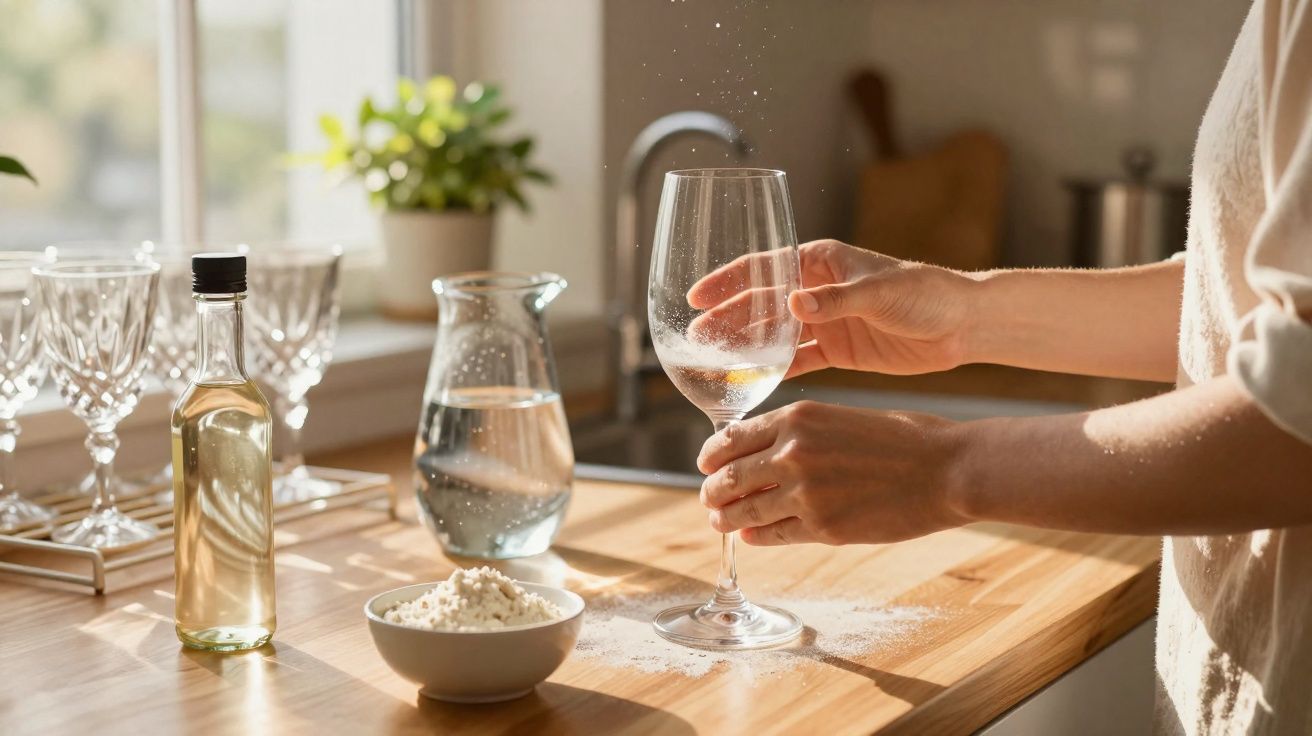
- Lingering odour: Rinse using 1 teaspoon of bicarbonate of soda mixed into 1 litre of warm water, then rinse again with plain water.
- Patchy results: Repeat with a warm solution and allow longer contact time; heavy scale often loosens in layers.
- Clogged shower jets: After soaking, gently clear each jet with a cocktail stick. Avoid pins, which can widen the holes.
- Washing machine care: Run an empty 60°C cycle with 250 ml of vinegar in the drum to reduce odours and light scale. In hard-water areas, doing this monthly is sensible.
- Dishwasher help: Put a cup of vinegar on the top rack and run a hot cycle. Try not to spill it onto bare metal components. Continue topping up salt and rinse aid as normal.
Prevention that actually sticks
Drying fixtures after use is one of the most effective habits you can adopt. A quick 10-second wipe prevents minerals from drying onto surfaces. Consider fitting low-cost tap aerators and shower heads designed for hard water; many can be twisted apart for fast cleaning. If you live in an especially hard-water area, a cartridge-based softener on the main feed to your hot water system can reduce scale at source and cut soap use at the same time.
How to gauge your water hardness
Signs include cloudy scum on tea, gritty flakes in the kettle, and white rings on dark tiles. Simple test strips reveal hardness in seconds, and local water suppliers publish hardness ranges by postcode. If you are at the hard end of the scale, plan on monthly descaling for kettles and quarterly attention for shower heads and taps.
Safety and practical reminders
- Keep the room well ventilated while you work.
- Wear washing-up gloves if your skin reacts easily.
- Never combine acids with bleach or ammonia-based products.
- Rinse metals thoroughly to avoid dulling, particularly on plated finishes.
- Store acids out of children’s reach and label any homemade solutions clearly.
A little, often, beats a deep clean. Short, regular soaks stop heavy crusts forming and keep energy use steady.
Extra context for curious readers
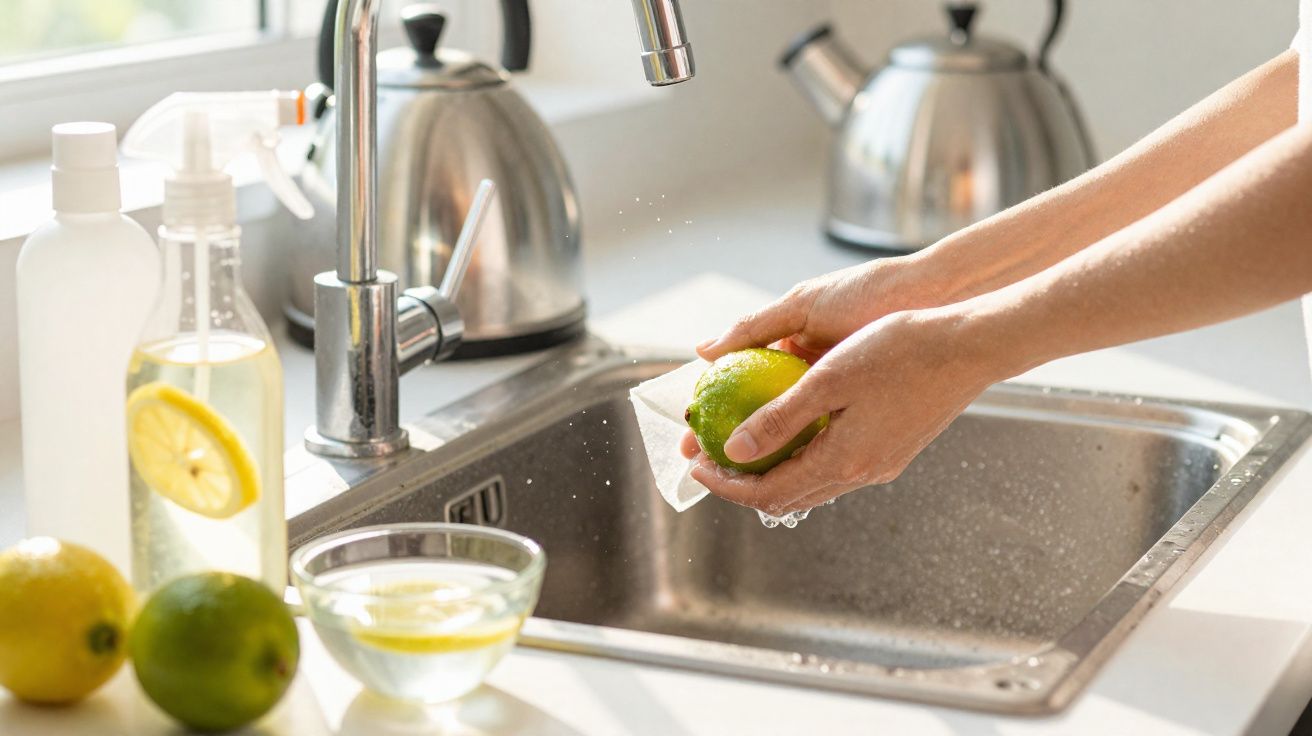
If the smell of vinegar puts you off, citric acid is a useful alternative to keep in the cupboard. Because it comes as a dry powder, it is easy to store and convenient to transport. Lemon juice can also dissolve scale, but its sugars and pulp may leave residues, making it better for open surfaces than for appliance interiors. For kettles with concealed elements, stick to clear solutions only, and never scrape scale off with metal tools.
A factor that is often overlooked is temperature. Running appliances at lower settings can reduce rapid scale formation, as fewer minerals drop out of solution. Where an eco programme is available, use it between occasional hotter cycles. Combined with quick vinegar soaks, this approach can mean quieter kettles, clearer glass and fewer inconvenient breakdowns-small gains that make day-to-day life smoother.
Comments
No comments yet. Be the first to comment!
Leave a Comment