
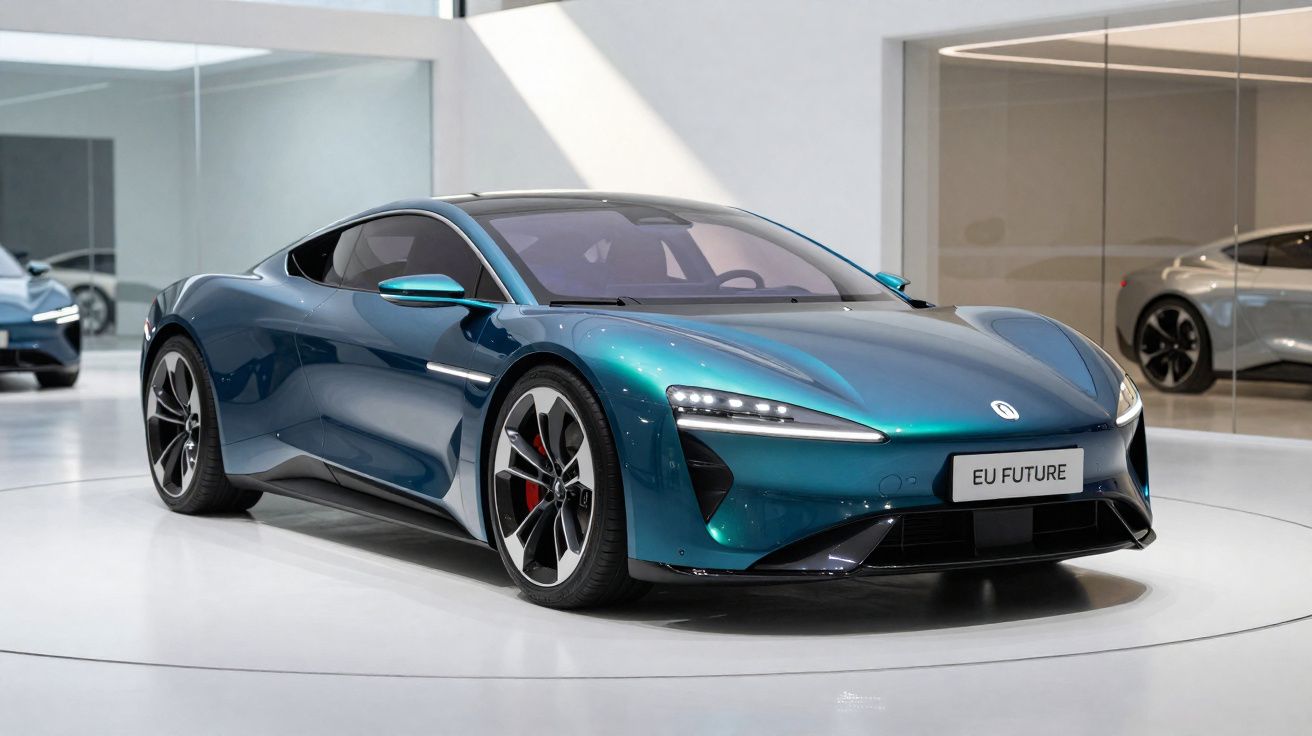
The rain hammers the glass roof of an exhibition hall in Brussels, yet the crowd is watching only one thing: a vivid red Chinese electric SUV gliding on to the stage without a sound. It looks impressive - uncomfortably so. A few metres away, a German executive in a charcoal suit bends towards a colleague and mutters, a little too loudly, “Under these rules, we can’t match that price.”
No translation is required; the tension is obvious.
Beyond the doors, European ministers talk about climate targets and industrial strategy. Inside, the people who actually make cars are scribbling figures on a pad - and the arithmetic is merciless.
They are no longer merely competing with China’s electric cars. They are asking, bluntly, how they are meant to survive.
Europe’s car giants are staring at a cliff edge
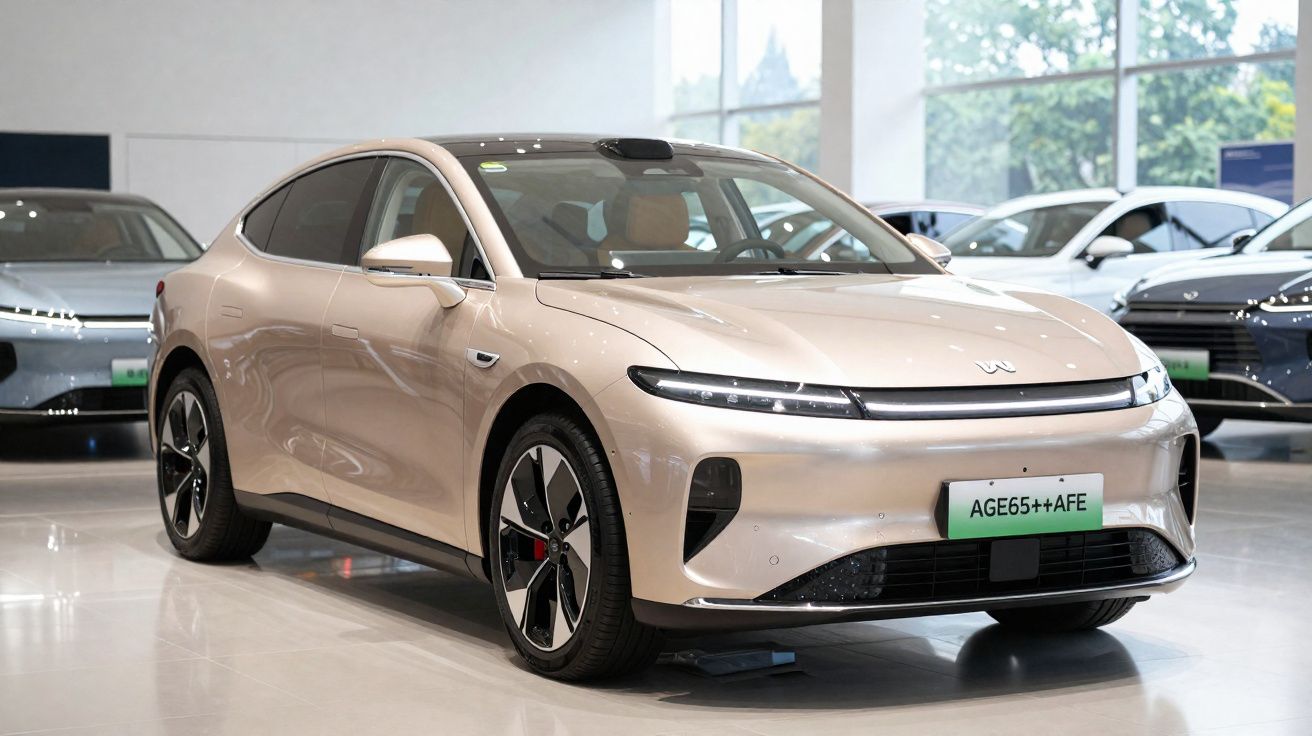
Stroll through almost any European city and the change is already visible. Teslas are no longer the only quiet vehicles sliding past cafés. Chinese-badged EVs - sleek, well-finished, and often wearing names drivers still hesitate over - are appearing in car parks, company fleets and ride-hailing services.
For decades, the rhythm of Europe’s roads was set by Volkswagen, Renault, Stellantis, BMW and Mercedes. They dictated expectations, norms and prestige. Now a fresh wave is breaking over a market they once dominated - and it is arriving at the worst possible moment.
That timing matters because these groups are trying to execute one of the largest technology shifts in their history while also coping with European rules designed for a world that has already moved on.
On paper, Europe’s story reads like progress: cleaner air, reduced oil dependence, strict CO₂ targets, a ban on new combustion engines after 2035, and ever-higher safety and environmental standards.
Then the real world interrupts. A mid-range Chinese electric car can land at a European port several thousand euros cheaper than a broadly comparable model built in France or Germany. Some of that gap is explained by lower labour costs and enormous battery manufacturing capacity in China. Some of it comes from forceful state support.
And, as engineers will tell you in lowered voices, part of it is that Chinese brands do not carry the same regulatory backpack that European rivals haul from the factory gate to the recycling yard. Everyone is running the same race, but the starting line is not the same.
The result is something European carmakers are not accustomed to: openly urging Brussels to alter the rules of the game.
They are not asking Europe to abandon climate goals. These companies have already poured billions into electric platforms, gigafactories and software. What they want is time, flexibility, and a dose of realism about what it takes to rebuild an industry while facing a competitor that spent years preparing for this precise moment.
Behind closed doors, executives arrive with spreadsheets and worst‑case modelling. If nothing changes, they warn, Europe does not merely risk ceding market share - it risks losing the ability to design, build and export cars at scale. A whole industrial culture could drain away while policymakers argue over regulatory footnotes.
The regulatory maze that’s suffocating the old continent’s factories
Inside many European plants, the move to electric feels like attempting a full renovation without ever being allowed to leave the building. Lines are being dismantled and rebuilt; staff are retrained; operations are electrified, digitalised and reorganised. Meanwhile, compliance teams upstairs grapple with stacks of EU rules: CO₂ fleet targets, battery sourcing requirements, recycling quotas, cybersecurity demands for connected cars, and additional safety obligations.
None of those requirements is irrational in isolation. Together, they can form a thick haze of complexity around every new model. New entrants from China often engineer directly towards the end-state: an electric car designed for scale and for export. European firms, by contrast, are trying to modernise a century-old cathedral while the Sunday service continues.
A concrete example repeatedly raised in lobbying meetings is the EU battery regulation. It requires manufacturers to track the origin of raw materials, meet strict environmental standards across the supply chain, and guarantee a minimum level of recyclability. In principle, it is exactly the sort of rule a climate-era economy should have.
In practice, a mid-sized European manufacturer may suddenly need additional audit teams, new IT systems to trace cobalt, and lengthy renegotiations with suppliers. Many Chinese competitors, by contrast, are already connected to vast, vertically integrated battery chains, often anchored by state-backed giants. The additional cost per vehicle in Europe can rise by several hundred euros before the car even leaves the factory.
Scale that across hundreds of thousands of vehicles and the “green premium” becomes a significant disadvantage in a price war Europe is already struggling to win.
This is where irritation turns into something sharper. European manufacturers are not pretending they have clean hands, but they insist they are not imagining the imbalance either. Their argument is that Europe is asking them to complete a triathlon while China can concentrate on sprinting. On CO₂, they accept hard targets - yet they question why imported EVs that benefited from cheap coal-powered electricity and heavy subsidies can face lighter scrutiny at the border than a diesel hatchback rolling out of a plant in Spain.
Another awkward truth: almost nobody reads the full wording of half these regulations. Even ministers rely on summaries. That is part of the dysfunction. The rules have accumulated layer upon layer - directive after directive - without a proper pause to look at the industrial whole.
What many car bosses are now calling for is not a regulatory bonfire, but a controlled pause to simplify, align and close the widening gap between green ambition and industrial reality. On the shop floor, that gap is beginning to resemble a chasm.
A further complication sits outside the legislation itself: energy costs and infrastructure. Electricity prices have been volatile, and grid constraints in parts of Europe can delay new manufacturing capacity, battery plants and charging roll-outs. Even when product plans are sound, the wider ecosystem can slow launches and raise costs - disadvantages that do not always show up in a regulation, but still land in the final vehicle price.
Skills are another pressure point. The shift to EVs changes the employment mix: fewer traditional engine roles, more software, power electronics and battery expertise. Without faster reskilling pathways and clearer long-term policy signals, suppliers and regional workforces can be left stranded between the old powertrain economy and the new one.
What Europe’s manufacturers are actually asking Brussels to change (European carmakers’ priorities)
When chief executives arrive in Brussels now, they do not come with slogans alone. They turn up with specific, itemised proposals. One major request is to adjust the 2035 combustion engine ban rather than treating it as untouchable. Some want a phased route with breathing space for hybrids, or allowances for e-fuels in particular segments, so profits from existing models can help finance the full electric transition.
Another demand is to speed up and simplify approvals for new EV platforms. Today, bringing a new model to market in Europe can take meaningfully longer than in China, where industrial strategy and regulation tend to pull in the same direction. For companies fighting for viability, an extra six months is not administrative trivia - it is lost revenue, wasted marketing spend and missing cashflow.
They are also focusing on the EU’s familiar promise of a “level playing field”. For manufacturers, that means tougher scrutiny of Chinese state support and a more strategic use of trade defence tools - but without detonating global supply chains. It is an anxious balancing act, not least because many European brands also produce and sell cars in China.
A further request may sound technical, but it strikes at the core of planning: more flexibility on CO₂ fleet targets when a carmaker can demonstrate genuine progress on electrification. No one is asking to return to high-emission engines. What they want is fewer cliff-edge deadlines that penalise a company for being 1 gram over a limit while a heavily subsidised imported EV faces no equivalent penalty.
They know it can sound like grumbling. They also know that if they do not push now, nobody will do it on their behalf later.
In these closed-door exchanges, you sometimes hear unusually frank statements.
“We’re not asking Europe to protect us from competition,” one senior executive told me recently. “We’re asking Europe to decide whether it still wants a car industry at all.”
Under that line sit a set of recurring demands:
- Clear, stable rules for at least 10 years, so factories can invest without panicking at every election cycle.
- Simplified environmental reporting, using one unified digital system rather than a patchwork of national requirements.
- Targeted support for battery plants and software skills within Europe, instead of watching those roles migrate to Asia.
- Proper checks on imported EVs’ carbon footprint - not only their catalogue emissions.
- Faster, more predictable approval timelines for new models and technologies.
The mood is rarely triumphant. It feels more like a restrained warning from people who can see the weather turning first.
A fight that’s bigger than car lovers and trade nerds
From the outside, this can sound like a technical tussle between lobbyists and Eurocrats. It is not. If you live in Europe, it will influence the price of your next car, the job market where you live, and even what your children’s streets look and sound like.
Picture one outcome: Europe’s historic manufacturers shrink into niche players, while most affordable cars are shipped from factories thousands of kilometres away. Dealerships thin out. Apprenticeships for mechanics and technicians decline. Small suppliers in rural regions lose their largest customer and struggle to recover.
Now picture another: Europe stays on its climate path while giving its industry a credible chance against heavily backed Chinese rivals. It may sound less glamorous than a choreographed SUV reveal - but it is a concrete choice sitting on a desk in Brussels today.
| Key point | Detail | Value for the reader |
|---|---|---|
| Regulations are tilting the field | Layered EU rules add costs and delays for European EVs, while Chinese brands arrive leaner and cheaper | Helps explain why Chinese electric cars can undercut prices in showrooms |
| Manufacturers are asking for targeted changes | Proposals include adapting the 2035 ban, streamlining approvals, and tightening checks on subsidised imports | Clarifies what might realistically change for buyers and workers in the next few years |
| The outcome affects far more than car prices | Decisions will shape jobs, skills and industrial sovereignty across Europe | Shows why the debate matters even if you’re not a car enthusiast |
FAQ
Why are Chinese electric cars cheaper in Europe?
They benefit from lower production costs, vast state-supported battery ecosystems, aggressive export strategies, and fewer legacy burdens than European brands, which are financing both old and new technologies at the same time.Are European manufacturers against climate rules?
No. They have already committed billions to electrification. Their argument is less about the destination and more about the pace, the complexity of the rulebook, and the fact that imports do not always face equivalent constraints.What specific regulations are they targeting?
The 2035 combustion engine ban, strict CO₂ fleet targets, the EU battery regulation, and slow, fragmented approval processes for new models are among the main pressure points.Could Europe just raise tariffs on Chinese EVs?
Tariffs are one of the trade defence tools available, but they come with risks: higher prices for consumers, possible retaliation affecting European brands operating in China, and disruption to supply chains that still rely on Chinese components and materials. That is why manufacturers talk about a “level playing field” approach - tougher scrutiny of state support and carbon footprint checks - rather than an all-out tariff war.



Comments
No comments yet. Be the first to comment!
Leave a Comment